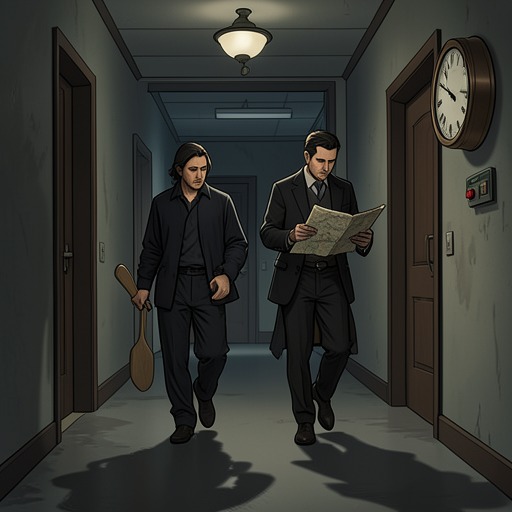
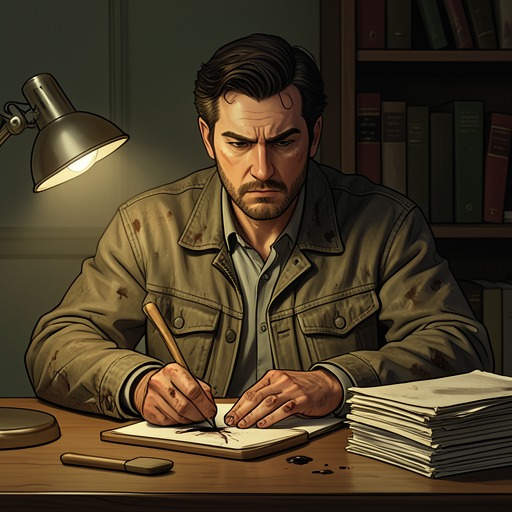
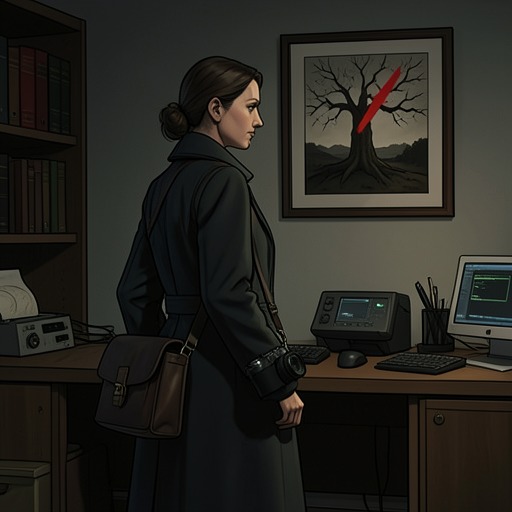
Event 1
Statenville triple deaths
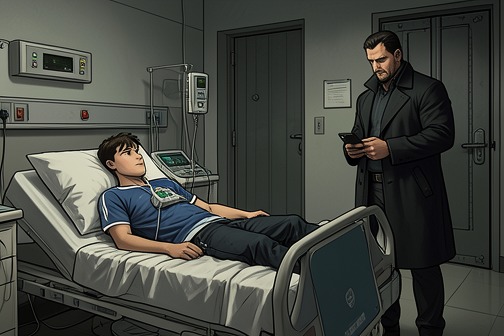
[Statenville triple deaths](entity:event-recall-event-statenville-triple-deat-24f71f6f7dd8) begins as three apparently separate deaths but functions as the decisive rupture in [Statenville](entity:location-recall-location-statenville-9cba88c84180)’s public image. [Cody Murray](entity:character-recall-character-cody-murray-178238e8ae1d), [Riley Gold](entity:character-recall-character-riley-gold-084ece358650), and [Devin Reid](entity:character-recall-character-devin-reid-c6af22fb75f9) are described officially as young victims of drug overdoses; the speed of their deaths, the inconsistencies surrounding the bodies, and the authorities’ insistence on a convenient explanation instead turn the case into the story that [Cal Murphy](entity:character-recall-character-cal-murphy-928376f1e444) and [Kelly Mendoza](entity:character-recall-character-kelly-mendoza-dcd2c2184a61) cannot abandon. What first looks like a local tragedy becomes the pressure point through which the town’s protected secrets begin to surface.
## The First Death and Cody Murray’s Ambition
[Cody Murray’s death](entity:action-recall-action-cody-murray-ef4cc190613d) is introduced through the contrast between extraordinary athletic drive and private vulnerability. Statenville’s greatest football star in fifty years, he is a six-foot scrambling quarterback from a rural Idaho eight-man team who has nevertheless secured several major scholarship offers. Even while trying to relax on a [Sunday](entity:time-recall-time-sunday-073632221971) afternoon with a sports magazine, Cody cannot remain still; constant motion defines him both on and off the field, and he dreams of one day appearing on a magazine cover.
His pursuit of athletic improvement has already crossed into drug use. Cody knows steroids are dangerous and difficult to obtain in a rural town, so he tells himself that he needs only a small, harmless boost for his workouts. The drug initially appears to him as assistance rather than a threat, but his use has begun to loosen from performance enhancement into simple pleasure. That shift matters because the death is not framed as an isolated act of recklessness. It grows from a sporting culture that rewards a powerful body, endurance, and visible competitiveness while leaving little room for caution or uncertainty.
The physical scene destroys the language of controlled athletic achievement. Cody first scratches at an itch above his elbow, then runs outside searching for relief. He removes himself from the house, digs both hands into his forearms, falls into the grass, rolls, and scratches while crying out. The itching feels like fire across his skin; his body becomes covered in bleeding welts as he writhes under the Idaho sun. After one final spasmodic convulsion, the itching stops and so does his breathing, leaving streaks of blood across his chest. The grotesque image makes the official simplicity of a drug death difficult to accept, especially because the victim is someone the town has built into a symbol of promise.
## The Official Explanation
Cal Murphy learns of the case from his editor, Guy Thompson, on a [Monday](entity:time-recall-time-monday-8b7d882d188f) morning. Guy orders him to get dressed and come to the newsroom immediately, announcing that Statenville has a double murder. He identifies the first two victims as Cody Murray and Riley Gold, and the wording initially gives the deaths the force of a deliberate attack rather than a private medical crisis.
The next official account sharply reduces that sense of danger. When Cal and Kelly question [Sheriff Jones](entity:character-recall-character-sheriff-jones-4b82540aea31), he says the boys threw away their talent for a meth high and describes the deaths as drug overdoses rather than murders. Cal asks directly about the third victim, and Jones identifies him as Devin Reid, Jim Reid’s son. Jones then objects to Cal’s repeated use of the word murder, insisting that all three died from a simple drug overdose.
The numbers and timing make the explanation unstable even before the investigation develops. Cal points out that the three deaths occurred within a twenty-four-hour period and asks whether that should seem suspicious. Jones concedes that it is suspicious in principle but argues that suspicion is not evidence. He presents the existence of meth at all three scenes as though it settles the matter, while also admitting that the toxicology reports will not return from [Boise](entity:location-recall-location-boise-c983dd657700) for at least two weeks. The exchange exposes an official strategy built from partial disclosure: authorities release one usable fact, meth at the scenes, while withholding or postponing the information that could establish how the victims actually died.
The medical evidence is pressured into conformity as well. Kevin Mendoza initially believes that the victims bled to death, but the response he receives is an emphatic declaration that they overdosed on drugs. When he notes that toxicology cannot confirm an overdose for several days and insists that drugs were not ultimately what killed them, the caller treats the conclusion as settled and cancels the toxicology screens. The deaths are therefore not merely investigated; their meaning is administratively fixed before the available tests can establish it.
## Athletic Culture and the Social Background
The deaths are connected to a local athletic culture in which performance is treated as a justification for chemical risk. [Mike Miller](entity:character-recall-character-mike-miller-33ee1d54b8ab) tells Cal and Kelly that promising athletes commonly use some type of drug and that few people in Statenville, including parents, seem to care. Miller recalls warning Cody’s father about possible drug use after practice. Cody’s father laughed and said that if the drug helped his son get ahead, he supported it. That reaction turns private ambition into family approval and shows how the pressure surrounding the athletes is distributed across the community rather than imposed by the boys alone.
Miller also explains why meth could appear attractive to an aspiring athlete. He has heard that it provides energy, allowing a person to work out longer; longer workouts can produce greater strength and physical ability. In the recruiting culture he describes, college coaches may care less about intelligence than about how an athlete looks when getting off the bus. The result is a destructive hierarchy of values: academic preparation is displaced by bodily display, and the body is treated as a credential that must be continually intensified.
Cody’s story embodies that logic with particular force. He wants his achievements to remain his own, yet he seeks a chemical kick to make those achievements possible. The phrase “harmless … at first” marks the gap between intention and consequence. The drug’s danger does not arrive as a remote warning; it enters through a familiar athletic desire to endure more, become stronger, and escape the limits of an ordinary body. The deaths thus reveal a form of violence that is both personal and cultural, produced by the collision between competitive masculinity, parental complicity, and a town’s willingness to admire results without examining their cost.
## From Local Tragedy to Threatened Investigation
The case changes value for Cal and Kelly when the three deaths cease to look like an unfortunate pattern of youthful drug use and begin to suggest deliberate concealment. Their questions meet evasions, staged openness, and a clear pressure to accept the overdose explanation. Statenville’s small-town rules discourage direct confrontation, and the newspaper itself follows those unspoken limits. The investigators understand that information is being managed, but they initially lack the authority to force the issue.
That imbalance becomes explicit when Cal is arrested on trumped-up charges of possessing an open container and driving under the influence. He knows the charges will not hold in a proper court: he rarely drinks and had not been driving with alcohol in his vehicle. He recognizes the arrest as an intimidation tactic by someone with power, and Sheriff Jones has him booked, photographed, and mocked throughout the process. Cal had believed that uncovering the truth about three suspicious deaths would benefit Statenville; inside the jail cell, he realizes that the secret he is approaching is more threatening to powerful people than he had understood.
The investigation consequently moves beyond the question of what killed Cody, Riley, and Devin. It becomes a contest over who is allowed to define the deaths. The authorities’ preferred account protects the town’s reputation and preserves the appearance of a peaceful community, while Cal and Kelly’s reporting threatens to connect the victims to a wider structure involving drugs, officials, and those who benefit from silence. The deaths are the first visible evidence of that structure, but the effort to suppress their meaning becomes nearly as important as the deaths themselves.
## Consequences and Narrative Significance
The triple deaths propel the main conflict of the book. They bring Cal and Kelly together as investigators, draw Guy Thompson into the danger surrounding their reporting, and eventually place Cal in direct physical peril. During the pursuit of the story, Cal is shot in the right arm while Kelly tries to move him toward an open dock; later, while fleeing on a motorcycle, Cal feels Kelly’s embrace around him and momentarily experiences intimacy amid the danger. These later scenes show how the deaths continue to govern the characters’ lives: the victims are absent, but their case dictates where the survivors go, whom they trust, and what risks they accept.
The deaths also establish the book’s central contrast between public order and hidden violence. Statenville presents itself as a quiet town with little serious crime, yet the official response to three deaths in one day is not open inquiry but classification, delay, and coercion. Meth found at the scenes becomes a substitute for explanation. The victims’ identities as talented young athletes make the tragedy more pointed, because the same qualities that promise them a future—discipline, physical endurance, and the desire to leave Statenville—are entangled with the pressures that help destroy them.
As an event, Statenville triple deaths therefore marks both an ending and a beginning. Cody Murray dies in a scene of extreme bodily suffering; Riley Gold and Devin Reid complete the pattern that authorities attempt to reduce to overdose. But the pattern cannot remain contained. The three deaths initiate Cal Murphy and Kelly Mendoza’s investigation, expose the consequences of a community’s tolerance for performance-enhancing drug use, and turn the supposedly peaceful Statenville into a place where uncovering the truth can provoke arrest, gunfire, and flight. Their decisive significance lies in that transformation: three deaths become the evidence around which the town’s entire moral and political order begins to crack.
Event 2
Cal Murphy’s road ambush and kidnapping
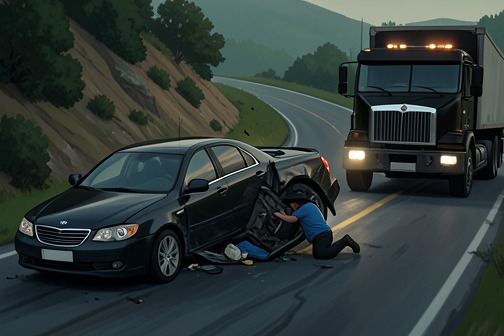
[Cal Murphy’s road ambush and kidnapping](entity:event-recall-event-cal-murphy-s-road-ambus-97b1c36e8693) is the decisive escalation of his investigation into the deaths of three teenagers. What begins as surveillance on an Idaho road becomes a calculated attack: the black [Ford F-250](entity:object-recall-object-ford-f-250-97a6d9b440e5) that has been following Cal rams his Civic, drives it into the woods beside the [Snake River](entity:location-recall-location-snake-river-78e812edfa45), and leaves him vulnerable to abductors who want his reporting stopped. The event changes the value at stake from professional truth-seeking to Cal’s immediate life and freedom, while making clear that the concealed power surrounding the teenagers’ deaths is prepared to use violence rather than argument.
## Surveillance and the Ambush
The attack follows a day in which Cal has been absorbed by the possibilities of his investigation and by a planned meeting with [Kelly Mendoza](entity:character-recall-character-kelly-mendoza-dcd2c2184a61). He is driving home through the Idaho farm country at dusk, with his headlights on and his thoughts occupied by the day’s events, when the vehicle that has been following him becomes an active threat. The F-250 does not merely trail him or attempt to intimidate him from a distance; it strikes his car from behind on a winding stretch of road roughly two miles from his apartment.
The first impact jolts both the Civic and Cal forward. When he turns, he sees the truck’s headlights bearing down on the rear of his vehicle, and the truck hits him again. The second collision is more destructive, bringing the truck’s chrome bumper against the Civic’s flimsy metal and sending Cal’s car into a spin. The attack removes every ordinary means of control at once: the steering wheel and brakes can no longer determine where the vehicle goes, and Cal is reduced to bracing for the next blow.
## Crash Beside the Snake River
The Civic spins five times before slowing and straightening, only to leave the road and careen down a shallow embankment into a patch of woods by the Snake River. Its descent is rendered as a succession of impacts with the landscape—rocks, trees, a boulder, a shallow stream, bushes, and more rocks—until the vehicle finally strikes an unforgiving obstruction. The physical sequence matters because the crash initially appears to provide a possible escape from the pursuing truck, yet it instead carries Cal into an isolated environment where the attackers can reach him beyond immediate public view.
The wreck leaves the Civic wedged between two pine trees. Steam hisses from its front, mangled metal has replaced a functioning engine, and the headlights become obscure beacons in the dense woods. Cal’s head rests motionless on the airbag, and his body does not move. The damaged car is therefore both evidence of the attack and the first enclosure of his captivity: it stops the assaulting vehicle’s pursuit by stopping Cal himself, while leaving him incapacitated and exposed.
## Abduction and Sedation
When Cal regains consciousness, the danger has shifted from a violent road collision to deliberate confinement. He is gagged and bound to a chair with duct tape beneath a solitary light bulb that hangs inches from his face. The dirt floor smells of manure, indicating that he is being held in a farm-related outbuilding rather than in the wrecked car or a conventional detention room. The disorientation is part of the captors’ control: Cal does not know how long he has been unconscious and can only wonder whether an hour, a day, or a week has passed.
His memory reconstructs the transition from crash victim to prisoner. After the airbags deployed, he believed he was physically unharmed and began stepping out of the car. At that moment, two men approached and injected him with a needle. The injection was a sedative, and it explains the missing interval between his apparent survival and his waking bound to the chair. The crash therefore functions as a staged opening to the kidnapping: the attackers use the wreck to disable and isolate him, then rely on chemical incapacitation to complete the abduction.
## The Threat Against the Investigation
A masked man questions Cal in a smooth, calm voice, an unsettling contrast to the blunt force used to take him. The questioning confirms that the kidnappers know both his identity and the subject of his work. They warn him to back off from digging into the deaths of the three teenagers, saying that continued investigation will anger powerful people and place both his safety and his life at stake. The threat is not presented as a random demand for silence; it directly connects Cal’s physical danger to the information he is pursuing.
Cal refuses to abandon the inquiry. He recognizes that he is rattling the cage of someone, somewhere, and treats the threat as evidence that his reporting has reached a sensitive point. The masked man counters that Cal will have a lifetime to write about the teenagers’ deaths and should wait a few months before disclosing what he knows. In return for delay, he is promised a reward. This proposed bargain exposes the logic of the opposition: the truth is not denied outright but managed through postponement, intimidation, and the offer of personal advantage.
## Consequences and Narrative Significance
The kidnapping makes the investigation inseparable from bodily risk. Before the ambush, Cal’s work could still be understood as a professional pursuit carried out through observation, memory, and reporting. After the truck attack, the hidden structure behind the deaths has shown that it can follow him, engineer a crash, remove him from the road, sedate him, and hold him in an unknown place. His freedom is no longer an assumed condition of inquiry.
The event also creates a sharp contrast between the violence of the method and the composure of the warning. The attackers use a truck, a wreck, duct tape, a gag, and repeated injections, yet the central demand is phrased as a controlled conversation about timing and reward. That contrast suggests an organization seeking to preserve the appearance of order while employing coercion beneath it. The final injection closes the scene by returning Cal to unconsciousness: after the masked man declares the conversation satisfactory, he punctures Cal’s neck with another dose of fast-acting sedative, and Cal’s vision dims before his head droops. The ambush and kidnapping thus end not with resolution but with enforced silence, carrying the investigation into a more dangerous phase in which survival itself becomes a condition of telling the truth.
Event 3
Cal Murphy’s arrest
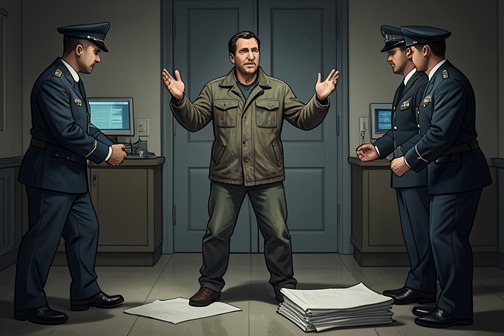
[Cal Murphy’s arrest](entity:event-recall-event-cal-murphy-s-arrest-50c293b36ece) marks the moment when [Statenville](entity:location-recall-location-statenville-9cba88c84180)’s effort to contain the three suspicious teenage deaths moves from guarded answers and editorial interference to overt legal intimidation. After Cal and [Kelly Mendoza](entity:character-recall-character-kelly-mendoza-dcd2c2184a61) continue pursuing evidence, deputies meet Cal outside [The Register](entity:organization-recall-organization-the-register-f0a1d26cd658) with handcuffs and announce that he is under arrest. The charges are possession of an open container and driving under the influence, although Cal knows he had not been drinking and had not been driving with alcohol in his car. The arrest is therefore less a credible prosecution than a public demonstration that the town’s authorities can turn an investigator into an accused man.
## Causes and Background
The arrest grows out of Cal and Kelly’s refusal to accept the official account of the deaths. [Sheriff Jones](entity:character-recall-character-sheriff-jones-4b82540aea31) identifies the third victim as [Devin Reid](entity:character-recall-character-devin-reid-c6af22fb75f9), the son of Jim Reid, while insisting that the boys died from simple drug overdoses rather than murders. Jones acknowledges that methamphetamine was found at all three scenes but says toxicology reports will not return from [Boise](entity:location-recall-location-boise-c983dd657700) for at least two weeks. His version depends on naming the deaths before the available medical evidence can establish what happened.
That official story is already contradicted by the work of Kevin Mendoza. While examining [Cody Murray](entity:character-recall-character-cody-murray-178238e8ae1d)’s body, Kevin sees extensive clawlike slashes across the torso, legs, arms, and face, with no part of the body left clear. He initially believes that the boys bled to death. When an unnamed authority orders him to state that they overdosed, cancel the toxicology screens, and submit a false report, Kevin complies publicly while keeping his original report beneath the new one on his clipboard. He also emails the Boise laboratory to cancel the victims’ blood tests. The arrest thus follows a broader struggle over evidence: the authorities are not merely denying Cal access to a story but actively reshaping the records through which the deaths might be understood.
Cal is also working against pressure inside The Register. Guy Thompson first orders him to visit the sheriff’s office, obtain whatever Sheriff Jones will provide, and report back, while directing him to keep Kelly with him for photographs and a dominant image for [Wednesday](entity:time-recall-time-wednesday-c0d2d52cbe23)’s paper. Once Cal continues digging, however, Guy says that nobody in town wants anything beyond funeral arrangements and flowers for the boys’ families. Later, Guy reassigns Cal to a reaction piece, reducing investigative reporting to a routine collection of public responses and crushing Cal’s hope of producing a major story. The arrest arrives within this atmosphere of controlled information, where official silence and editorial containment reinforce one another.
## The Arrest
The immediate scene begins when Kelly Mendoza drives toward The Register and notices two deputy cars outside the entrance, their lights flashing. [Jake Dawkins](entity:character-recall-character-jake-dawkins-2bed3f38985c) and Sheriff Jones lean against the cars, watching the street in her direction; after seeing her vehicle, they open their doors and speak into their radios. Kelly parks in the back lot, and Cal has barely set one foot on the gravel before Dawkins and Jones greet him with handcuffs. Sheriff Jones states that [Cal Murphy](entity:character-recall-character-cal-murphy-928376f1e444) is under arrest, making the confrontation feel prepared rather than incidental.
The arrest is especially coercive because Cal has just received a warning connected to the previous night’s events. The letter addresses him as an important ally, urges him to keep quiet and invent a cover story, and warns that learning what is happening in the community could put him at risk. It promises that information might eventually bring him national recognition, but threatens other forms of persuasion if he ignores the instruction. The letter also tells him not to show it to Kelly or Guy. Cal nevertheless decides to continue investigating and to use the reaction piece as cover. His arrest follows almost immediately, turning the warning’s abstract threat into a concrete loss of freedom.
The charges are described as trumped up. Cal understands that possession of an open alcohol container and driving under the influence would not withstand scrutiny in a real court, because he rarely drank and had not been driving with alcohol in the car the previous night. Within Statenville, however, the practical point is not legal durability. The charges provide a bureaucratic pretext for removing him from the street, discrediting him as a reporter, and signaling to others that investigation carries personal consequences.
## Jail and Immediate Consequences
The Statenville jail intensifies the arrest’s humiliating character. It is little more than a holding cell: a ten-by-ten-foot space with a concrete-block wall, three sets of iron bars, water dripping from the ceiling, a dark stain in one corner, and no bed. A stainless-steel toilet is its only furnishing. Drifters and drunks usually remain there for no more than twenty-four hours before real criminals are transferred to Boise, and the town has not held a serious threat to its peaceful reputation for three years. Cal becomes the exception that exposes the jail’s larger function: a supposedly quiet civic space is suddenly used against someone whose questions threaten powerful interests.
Jake Dawkins books Cal, takes his mug shot, and mocks him throughout the process. Cal does not know whom he could hire as a lawyer, and Statenville’s limited attorneys are unavailable to him as meaningful options. The arrest therefore removes more than his immediate mobility. It cuts him off from professional resources and leaves him inside a local legal structure controlled by the same authorities whose account he is examining.
Cal believes he is helping Statenville by determining whether someone malicious is responsible for the deaths. From the cell, he realizes that the secret he is approaching may be more threatening to powerful people than he had understood. His physical confinement becomes a measure of the investigation’s stakes: the closer he comes to a hidden explanation, the less the town treats him as a citizen asking legitimate questions and the more it treats him as a problem to be contained.
## Institutional Control and Later Relevance
The arrest belongs to a chain of discretionary decisions rather than standing apart as an isolated abuse. Sheriff Jones minimizes the deaths, supplies selected facts about methamphetamine, and withholds the unresolved toxicology. Kevin Mendoza is pressured to replace an autopsy conclusion with an overdose narrative. Guy Thompson attempts to redirect Cal from investigation to a reaction piece. Deputies then enforce a nominal traffic-and-alcohol violation at the exact moment Cal resumes his inquiry. Each decision can appear ordinary when viewed separately; together they create a system in which official labels displace physical evidence and administrative power narrows the range of permissible questions.
The same pattern later governs the pursuit of Cal and Kelly as fugitives. When Jake Dawkins and rookie deputy [Willie Warren](entity:character-recall-character-willie-warren-ebcc4c017537) are sent to Walker’s house, Sheriff Jones initially describes the call as a disturbance, then tells Dawkins that the location holds Statenville’s most wanted fugitive, Cal Murphy. The reporters are again targeted through charges characterized as fabricated, while Warren approaches with his gun drawn despite having no reason to believe the situation is dangerous. The arrest therefore foreshadows a wider escalation from local intimidation to organized pursuit.
The event’s significance is finally measured against the reporting that follows. Cal’s story is later printed in two newspapers, showing that the arrest fails to erase the investigation even though it temporarily removes him from the newsroom and the streets. The mug shot, the false charges, and the cell are intended to make the reporter look like the offender; the eventual publication reverses that framing by returning attention to the deaths and to the institutions that tried to define them before the evidence could speak. As a narrative event, Cal Murphy’s arrest changes the central value from professional risk to immediate captivity, while confirming that Statenville’s most powerful defense is not a persuasive explanation but control over movement, records, and public perception.
Event 4
The attack on Cal and Kelly at Cal’s apartment

[The attack on Cal and Kelly at Cal’s apartment](entity:event-recall-event-the-attack-on-cal-and-k-c05d476bd411) is the decisive ambush that turns an atmosphere of incomplete information into an open campaign of violence. Two masked, armed men arrive in a black van, pursue them across the parking lot, and fire at them as they escape. Cal’s improvised motorcycle flight succeeds, but the attack leaves the pair displaced, hunted, and forced toward [Devil’s Canyon](entity:location-recall-location-devil-s-canyon-82dbcae0b5ec), where the wider danger surrounding [Cloverdale Industries](entity:location-recall-location-cloverdale-industrie-00e2be007fa9) becomes inseparable from their immediate struggle to stay alive.
## Causes and Background
The attack begins at a moment when Cal is already weighing whether to follow a mysterious note’s advice and do nothing. He has deposited the dishes in the sink and is trying to distinguish what he knows from the blanks still surrounding the case; the result is not clarity but near-total uncertainty. Kelly’s return interrupts that hesitant pause. She comes through the front door in hysterics after seeing a black van across the parking lot and reporting that the driver is wearing a ski mask. The threat is therefore first perceived indirectly, through a vehicle, concealment, and a witness’s alarm, before Cal confirms its physical presence.
The attack’s timing gives it special force. Cal is not preparing for a confrontation or equipped for a planned defense. He is sitting at home, attempting to think through an unresolved investigation, when Kelly’s warning turns the apartment into a temporary trap. The mysterious note has encouraged passivity, but the arrival of the van makes inaction impossible. The event thus exposes the cost of trying to remain still in a conflict whose opponents already possess surveillance, weapons, and the initiative.
## The Assault and Immediate Threat
Cal looks from the window and sees two men dressed entirely in black running across the parking lot toward his apartment building. Their assault weapons make the danger unmistakable, while their clothing and masks deny them ordinary identities. The men are not merely approaching to intimidate the occupants; they are organized attackers moving directly on the building. Cal reacts by taking Kelly’s hand and formulating an escape plan rather than waiting to learn what the intruders intend.
Kelly grabs her bag but deliberately leaves the notepad behind. The near-blank paper may persuade the pursuers that Cal and Kelly know little or nothing, so the abandoned object becomes a small act of deception within the larger flight. It also reveals the pressure under which they are operating: even an apparently trivial possession must be judged for whether it could expose their knowledge or prolong the pursuit.
Cal leads Kelly out through the back door toward the small private garages behind the apartment unit. He fumbles for his keys while running, manages to insert the key on his first attempt, and slams the garage door behind them. The movement is hurried but purposeful: the apartment’s exits and the attackers’ approach leave no time for explanation, and Cal’s practical knowledge of the garage supplies the pair with an alternative route when the front of the building is compromised.
Inside, Cal uncovers a [Honda 280XR dirt bike](entity:object-recall-object-honda-280xr-dirt-bike-c85606fc5c17). Kelly does not initially understand why he has brought her there, but Cal identifies the motorcycle as what will save their lives and tells her to get on. He pushes it near the door and stomps on the foot crank. The engine starts on the second kick, giving the escape a narrow but crucial opening. The bike is not the fastest machine, yet its zero-to-sixty acceleration is exactly suited to the immediate need: they require a rapid burst away from the building, not a long contest of speed.
## Escape Under Fire
Cal anticipates that the two attackers will split up, with one coming around the front and the other along the near side of the building. He points the motorcycle toward the far side and opens the engine wide. The escape is not a blind reaction; it is a quick tactical calculation based on the attackers’ likely positions and the building’s layout. Cal chooses the route that gives the pair the greatest chance of reaching the farthest exit before the men can close the gap.
The danger peaks when Cal looks back and sees one attacker aiming an automatic assault weapon. Bullets pass near their heads, and Kelly screams in terror. Cal suppresses his own desire to scream, banks left around the building, and heads toward the distant exit. The scene compresses thought, physical movement, and fear into the same instant: Kelly’s scream registers the human terror of the attack, while Cal’s controlled riding converts that terror into action.
After another thirty seconds of riding, Cal’s strategy works. The two men disappear from sight; the last image he has of them is a frantic dash back toward their truck. Cal knows that the distance he has created will allow him to be gone before they can resume the chase. The value at stake shifts from apparent safety to imminent death and then, provisionally, back toward survival. The apartment no longer represents shelter, and the motorcycle becomes the instrument of escape that makes continued resistance possible.
## Devil’s Canyon and the Wider Pursuit
Cal tells Kelly that he knows a place where the attackers will never find them. When she asks where, he names Devil’s Canyon. The destination is not chosen at random. Devil’s Canyon is a dirt-bike enthusiast’s haven, made up of rolling dirt hills extending for miles without man-made objects. Four-wheeled vehicles perform poorly there, with even Land Rovers and Jeeps struggling across the terrain, while caves provide hiding places if someone spots the fugitives.
The timing of the flight matters. It is two o’clock, and the canyon is quiet, but by four o’clock it will be filled with the buzz of two-stroke engines as riders arrive. Cal and Kelly therefore need to disappear before the ordinary activity of the area begins. The same setting that offers concealment also imposes a deadline: once the canyon fills with riders, their presence may become harder to control, and the opportunity for a discreet hiding place may narrow.
Cal’s dirt-biking skills give him an advantage in this terrain, extending the escape beyond the apartment and into a landscape designed to defeat pursuit by road vehicles. Yet the canyon is not an absolute refuge. A long chain-link fence forms a surprisingly secure perimeter around the back property of Cloverdale Industries, nearly two miles away. Cal recognizes that riding toward it would be pointless, and the fence marks the boundary between a temporary hiding place and the industrial power connected to the danger pursuing them. His route away from the apartment therefore also carries him toward the larger geographic and institutional presence of Cloverdale Industries, even as he avoids crossing its perimeter.
## Consequences and Significance
The attack changes Cal and Kelly’s status from investigators trying to fill gaps in a troubling case into fugitives whose survival depends on movement, concealment, and tactical judgment. Before the assault, Cal can still consider doing nothing because the facts remain incomplete. After masked men with assault weapons fire at them, uncertainty itself becomes evidence of danger: someone is willing to act against them before they understand the full structure of the threat.
The event also establishes the partnership under pressure. Cal takes command of the escape, but Kelly contributes alertness, follows his instructions, retrieves what she can carry, and leaves behind the notepad as a calculated misdirection. Their survival depends on complementary responses rather than on a single heroic gesture. Cal supplies planning and technical skill; Kelly’s warning makes the plan necessary, and her immediate choices help preserve their chance of disappearing.
Narratively, the black van and ski mask create an initial layer of terror before the attackers are fully seen; the later image of two men in black carrying assault weapons converts that unseen threat into visible horror, and the bullets passing their heads make the danger physically immediate. The attack’s strongest consequence is not simply that Cal and Kelly escape. It is that escape becomes the governing condition of what follows. The Honda 280XR dirt bike, the private garages, the far exit, the missing pursuers, and Devil’s Canyon form a chain of practical decisions through which the story crosses from investigation into open conflict, with Cloverdale Industries waiting beyond the canyon’s fence as a larger and more dangerous horizon.
Event 5
The Devil’s Canyon escape
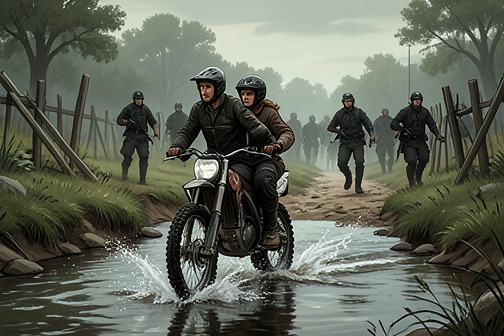
[The Devil’s Canyon escape](entity:event-recall-event-the-devil-s-canyon-esca-a1a725590910) is the pursuit-and-flight sequence in which [Cal Murphy](entity:character-recall-character-cal-murphy-928376f1e444) and [Kelly Mendoza](entity:character-recall-character-kelly-mendoza-dcd2c2184a61) try to survive an attack by armed gunmen after their investigation has made them targets. Hiding in a dirt-bike wilderness offers only a temporary advantage: the attackers soon enter the canyon, forcing Cal and Kelly onto a [Honda 280XR dirt bike](entity:object-recall-object-honda-280xr-dirt-bike-c85606fc5c17), across an eight-foot creek bed, and beneath a damaged fence bordering [Cloverdale Industries](entity:location-recall-location-cloverdale-industrie-00e2be007fa9). Their escape succeeds, but only narrowly, and the camera bag they risk their lives to recover ensures that survival remains tied to the larger journalistic search for proof.
## Causes and Background
The immediate cause of the escape is the escalating danger surrounding Cal and Kelly’s investigation. Cal has begun to understand that the deaths they are examining cannot be dismissed as an ordinary overdose story, while the forces protecting [Statenville](entity:location-recall-location-statenville-9cba88c84180)’s secret are prepared to use violence rather than allow scrutiny to continue. The pursuit is therefore not an accidental confrontation but part of a wider system in which information, money, and force protect the interests of Cloverdale Industries and its allies.
The contrast between public respectability and hidden coercion frames the sequence. Guy Thompson had once accepted monthly payments of exactly one hundred twenty-dollar bills to act as though Statenville were merely a sleepy town, while [Nathan Gold](entity:character-recall-character-nathan-gold-7365a72de97d) could command the city through obedience and preserve its dark secret through an intricate network of paid insiders. Cloverdale’s secrecy was reinforced by supposedly rigorous background checks and the threat of federal prison for employees who exposed the operation. Against that structure, Cal and Kelly’s decision to continue investigating the deaths of three teenagers becomes a direct challenge to the town’s enforced silence.
## The Canyon as Temporary Refuge
[Devil’s Canyon](entity:location-recall-location-devil-s-canyon-82dbcae0b5ec) initially appears to offer the qualities an escape requires. It is a vast region of rolling dirt hills without man-made objects, difficult for four-wheeled vehicles and filled with caves where fugitives can hide. Yet its safety is limited by time. It is two o’clock, and the pair must leave before four, when dirt-bike riders will fill the area with the noise of their two-stroke engines. The canyon provides concealment, but it cannot become a permanent refuge.
Cal uses his dirt-biking skills to reach a favorite cave, where he helps Kelly off the bike and tries to give her the thing she most needs after the attack: a plan. He proposes that they lie low for about an hour and then attempt to return to town, perhaps contacting Guy. Kelly rejects the idea because Guy might fire Cal, assume that he violated instructions, and treat the attack as proof of his recklessness. Their argument shows that the escape is also a crisis of trust: the physical danger is immediate, but their access to allies and professional protection is already uncertain.
The possibility of help quickly turns into a new threat. Cal hears motorcycles approaching from the direction of the main road, and the sound grows from a faint engine to several bikes. He and Kelly wait for the riders to come into view, hoping for assistance but withholding a decision until they can identify them. When the first bike finally appears roughly four hundred yards away, it is not a possible rescuer but one of the armed gunmen. The unseen threat has become visible, and the refuge collapses at once.
## The Flight to Cloverdale’s Fence
Cal reacts by starting the motorcycle and ordering Kelly onto it. The pursuers are about three hundred yards behind and closing while the bike has not yet reached top speed. He heads west, using the open terrain and his knowledge of dirt biking to keep the gunmen from gaining much ground. The route becomes a race between the motorcycle’s limited acceleration and the narrowing distance behind them; after roughly a mile and a half, only two miles remain before the wooded area Cal hopes will provide cover.
With about fifty yards left, Cal spots a sizeable hole beneath the back perimeter fence of Cloverdale Industries. The opening offers a route into concealment, but the ground between them and the fence contains an eight-foot-deep creek bed about six feet across. Cal considers two choices: hiding in the brush and hoping the gunmen fail to find them, or attempting the jump. Because the pursuers are still coming at full speed, he decides that the creek is the lesser danger and quickly instructs Kelly what to do.
Cal takes a running start and clears the creek with relative ease. Kelly is less certain, admitting that she does not think she can make the leap. Cal tells her to stop measuring the distance and jump, then urges her to trust him. When she reaches the bank, loose dirt gives way beneath her feet and sends her into the ankle-deep water. The splash is quiet enough that the gunmen, still on their motorcycles and searching near the bike Cal has shoved aside, do not hear her fall. Cal whispers for her hand and hauls her up the additional three feet to the opposite bank.
He immediately sends her beneath the fence and keeps watch while she crawls onto Cloverdale Industries property. Cal then begins backing under the fence himself. The escape is nearly complete, but Kelly notices that he has left behind her backpack and kicks his leg to remind him. Cal would rather get away alive, yet he understands that the story may not be believed without evidence. He reaches back for Kelly’s camera bag and pulls it beneath the fence with him.
## Consequences and Significance
The camera bag turns the escape from a simple flight into a struggle over evidence. Cal’s choice to retrieve it adds a final, avoidable danger at the exact moment when the pair should be disappearing. One elastic string catches on the fence and snaps free with a clang, alerting the gunmen. Their shouted discovery forces Cal to urge Kelly onward, replacing stealth with one more burst of movement under immediate threat.
The sequence also reveals how far the opposition’s reach extends. The attack is connected to a power structure capable of directing local officials, paying hidden personnel, and deploying armed men beyond ordinary law enforcement. Later developments confirm that the pursuit exists within a broader conflict involving undercover federal agents, Cloverdale Industries, and the concealed criminal identity of Nathan Gold. The escape therefore moves Cal and Kelly across more than physical boundaries: from the exposed road into the canyon, from the canyon toward the industrial perimeter, and from investigative suspicion into direct confrontation with the machinery protecting the secret.
Its decisive value shift is from apparent refuge to renewed pursuit, then from near-capture to precarious survival. Devil’s Canyon first seems to grant Cal and Kelly distance, silence, and specialized terrain; the approaching motorcycles convert each advantage into a trap. The creek, the loose bank, the fence, and the noisy camera-bag strap become successive tests in which escape depends on quick judgment and mutual trust. They do not return safely to ordinary life, and the fence does not resolve the danger, but crossing it preserves both their lives and the material basis for exposing what Statenville has been paid to conceal.
Event 6
The Cloverdale Industries infiltration
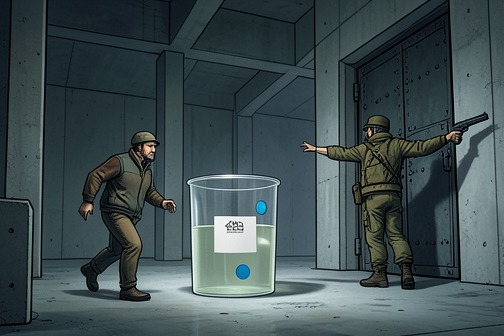
[The Cloverdale Industries infiltration](entity:event-recall-event-the-cloverdale-industri-1c5603de7cf1) is the decisive investigative break-in carried out by [Cal Murphy](entity:character-recall-character-cal-murphy-928376f1e444) and [Kelly Mendoza](entity:character-recall-character-kelly-mendoza-dcd2c2184a61). What begins as an attempt to find evidence behind three supposedly ordinary drug overdoses becomes a life-threatening encounter with [Cloverdale Industries](entity:location-recall-location-cloverdale-industrie-00e2be007fa9)’ armed security and a discovery inside the company’s warehouse: a bottle labeled “Clean and Clear” that contains crystal methamphetamine rather than cleaning liquid. The infiltration changes the case from a local mystery into evidence of an organized drug operation protected by violence, secrecy, and institutional complicity.
## Causes and Background
The break-in grows out of the deaths of three young people in [Statenville](entity:location-recall-location-statenville-9cba88c84180) within a 24-hour period. [Sheriff Jones](entity:character-recall-character-sheriff-jones-4b82540aea31) insists that the victims died from simple drug overdoses rather than murders, while acknowledging that meth was found at all three scenes. He presents the discovery as evidence already sufficient to justify the official account, even though the toxicology reports have not yet returned from [Boise](entity:location-recall-location-boise-c983dd657700) and will not be available for at least two weeks. Cal and Kelly’s questions expose the gap between a convenient law-enforcement explanation and a fully established cause of death.
The town’s wider structure makes such a gap consequential. [Nathan Gold](entity:character-recall-character-nathan-gold-7365a72de97d) and his wife had known that their son [Riley Gold](entity:character-recall-character-riley-gold-084ece358650) had begun experimenting with drugs, but they ignored the warning signs and never expected him to die. Nathan Gold’s authority over Statenville depends on keeping the town’s dark secret contained; the fewer people who know, the less likely anyone is to object, and those who do know are paid handsomely. Guy Thompson has accepted a monthly brown paper bag containing exactly one hundred twenty-dollar bills in exchange for treating Statenville as a sleepy town and refusing to search for the secret he suspects exists. The infiltration therefore enters a community where official statements, financial dependence, and fear reinforce one another.
## Entry and Immediate Threat
Cal and Kelly reach the [Cloverdale Industries facility](entity:object-recall-object-cloverdale-industries-e7e24204833d) as outsiders whose intentions have already been recognized as hostile. After Cal is wounded, they scramble through an open bay door into a warehouse that is less full than he expected but extends into darkness for at least 300 yards. Stacks of empty wooden pallets line the back wall, and a janitor’s closet stands about 30 yards away. With the burning sensation in Cal’s arm and the closet close at hand, he chooses concealment there rather than attempting to hide on top of a storage rack.
Inside the facility, Cloverdale security fans out in search of the two suspects. [Mel Davis](entity:character-recall-character-mel-davis-99311fc67a8c), the head of the security operation, is told by an executive that a man and a woman have breached the perimeter and do not have good intentions. The order is shoot to kill. Davis is accustomed to strict security despite Cloverdale’s public image as a mid-level marketing company, and managers routinely explain the precautions as necessary protection against corporate espionage. He accepts the paycheck and follows instructions, although he has often doubted whether he could actually pull the trigger against the supposed spies.
The threat becomes explicit while Cal and Kelly remain hidden. Four or five employees approach the closet, warn one another that reporters have broken into the facility, and invoke the company’s Golden Rule. They are assigned overnight destinations: [Seattle](entity:location-recall-location-seattle-ec620f372076), [Portland](entity:location-recall-location-portland-1d591afddc1c), and San Francisco. The instructions are to keep a low profile, obey the speed limit, and avoid attracting attention to the product. The speakers then receive the final order: if they see the reporters, they are to shoot them, after which another team will clean up the scene and provide a cover story. The warehouse doors open, forklifts begin moving, and ordinary commerce resumes around a planned killing.
## The Physical Discovery
For more than 30 minutes, Cal and Kelly sit motionless in the janitor’s closet while the warehouse operates around them. Each set of approaching footsteps produces the possibility that they will be discovered before anyone has to account for their bodies. When the last audible footsteps fade, Cal presses his face against the cold concrete floor and peers into the warehouse. He sees no feet, but notices a stack of boxes only 10 feet from the closet.
Cal abruptly leaves cover, takes a small box bearing the Cloverdale Industries logo, and returns before re-securing the door. Kelly whispers that he is insane, but Cal explains that if the men intend to kill them, he wants to know why. Using his house keys, he cuts through the packing tape as quietly as possible. The box contains a bottle labeled “Clean and Clear”; instead of cleaning liquid, it holds white crystals. Kelly identifies the substance as crystal methamphetamine. The everyday packaging becomes the crucial object in the investigation: the company’s public identity as a producer of cleaning supplies is contradicted by the material concealed inside its own branded container.
Cal has seen drug use at college parties, though never beyond marijuana, and recognizes the danger of possessing enough crystal methamphetamine to expose himself to a possible 20-year prison sentence if police enter the closet. He asks what the facility really is. Kelly says she has heard that Cloverdale Industries manufactures cleaning products and vitamins as a cover for its drug operation, a rumor she had dismissed because relatives work at the company and do not fit her image of criminals. The bottle supplies what the rumor lacked: direct physical evidence.
Cal then asks Kelly to photograph the crystals. He plans to pour the contents onto the floor and preserve the image while avoiding the risk of carrying the substance out of the facility. The distinction matters because the infiltration produces both evidence and vulnerability. A photograph can support a report without leaving Cal in possession of the drugs, while the bottle itself makes the supposed marketing company materially legible as a distribution point.
## Connection to the Marker Program
The discovery later connects Cloverdale’s operation to the FBI’s abandoned [CPZ](entity:object-recall-object-cpz-fb4f361990d1) marker research. The program was designed to use CPZ as a chemical marker in drugs, allowing investigators to identify users and major dealer distribution networks. Unusual cases would alert the [Centers for Disease Control and Prevention](entity:organization-recall-organization-centers-for-dise-242754e055e8), from which the [Federal Bureau of Investigation](entity:organization-recall-organization-federal-bureau-o-f1c5664278d2) could obtain basic information about the spread of a dealer’s network.
The program had been field-tested in 2008 by undercover operatives in Seattle, Los Angeles, and Phoenix. In each city, the tainted individual dosage was followed by the user’s death, although the report did not specify the cause. The FBI disbanded the program because the deaths created unacceptable publicity, even though the technique might have served its investigative purpose. The infiltration’s bottle thus points toward a technology that was supposed to generate information about criminal networks but instead became associated with lethal experimentation.
The ethical failure is sharpened by the earlier animal testing. [Monkeys](entity:creature-recall-creature-monkeys-9cbf10ed54b7) reportedly tore at themselves and died, while dogs scratched and clawed themselves to death. Officials concluded that the marker might work in theory but could not ethically be tested on human beings. Walker nevertheless used his chemistry minor to challenge the bureau’s professional judgment. He inserted marker chemicals into drug batches, then placed the chemical in drugs found in Riley Gold’s car because Riley and other players on his team were known to be experimenting with drugs. Walker expected to observe the distribution and trigger the CDC’s detection system, but failed to account for the possibility that the compound would kill people. The infiltration’s discovery therefore reveals not only Cloverdale’s concealment but also the collision between criminal distribution, covert federal research, and unauthorized human experimentation.
## Consequences and Significance
The immediate consequence is that Cal and Kelly learn they are not merely trespassers facing arrest. They are targets of an organized effort to eliminate them and fabricate an explanation afterward. The warehouse conversation confirms that Cloverdale’s workers transport a hidden product to several cities, while the kill order demonstrates that secrecy is enforced through planned violence rather than corporate discipline alone. The operation’s scale extends beyond Statenville, and the reporters’ investigation becomes dangerous precisely because it threatens the flow of product and the story that protects it.
The infiltration also alters the meaning of the three deaths. Sheriff Jones’s claim that the victims simply overdosed is no longer an isolated official judgment. Methamphetamine appears at all three scenes, Cloverdale’s warehouse disguises crystal methamphetamine as household merchandise, and the later account of Walker’s marker experiment explains how a contaminated batch could have produced deaths that looked like overdoses. What had seemed to be local misfortune becomes evidence of a chain involving Riley Gold, Cloverdale Industries, CPZ research, and the people responsible for hiding the consequences.
Finally, the break-in exposes the architecture surrounding the company. Nathan Gold finds it difficult to manage even ordinary city affairs while preserving Statenville’s secret; his protection system includes background checks, paid employees, concealed enforcers, and a willingness to use a secluded rocky quarry when persuasion fails. Yet the system is vulnerable to infiltration from within. The Federal Bureau of Investigation places [Buddy Walker](entity:character-recall-character-buddy-walker-6bfab5255c83) and [Elliott Mercer](entity:character-recall-character-elliott-mercer-8b2e2f857624) inside Statenville under deep cover, and Mercer eventually learns the town’s central secret after passing a deliberately designed trust test. The reporters’ entry and the federal operation converge on the same fact: Cloverdale Industries is not simply a suspicious business but the visible facility of a drug network whose survival depends on controlling information, moving product across state lines, and treating witnesses as disposable. The infiltration is therefore the narrative moment when the hidden economy becomes physically and morally undeniable.
Event 7
Buddy Walker’s false rescue and abduction
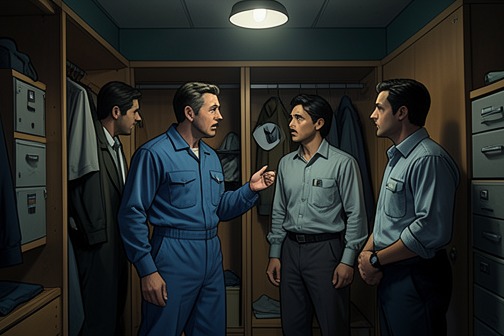
[Buddy Walker’s false rescue and abduction](entity:event-recall-event-buddy-walker-s-false-re-d1b446507b46) is the decisive reversal in which apparent assistance becomes a second kidnapping. After [Cal Murphy](entity:character-recall-character-cal-murphy-928376f1e444) and [Kelly Mendoza](entity:character-recall-character-kelly-mendoza-dcd2c2184a61) hide inside [Cloverdale Industries](entity:location-recall-location-cloverdale-industrie-00e2be007fa9), Walker presents himself as an embarrassed but sympathetic [Statenville](entity:location-recall-location-statenville-9cba88c84180) High basketball coach who can smuggle them out. Instead, he uses the escape plan to seize them, drug Cal, bind both reporters, and return them to captivity. The episode changes Walker from a familiar community figure into an active agent of the conspiracy and makes the language of protecting the common good a justification for coercion.
## Apparent Help Inside Cloverdale Industries
Walker encounters Cal and Kelly in a janitor’s closet while wearing a blue jumpsuit marked with his name. His bewildered recognition initially makes the meeting seem accidental: he asks what they are doing there, while Cal questions why the boys basketball coach is inside the facility. Walker explains that he earns too little at the school and has been moonlighting as a janitor. He treats the work as embarrassing and asks them not to disclose it, a request that gives the encounter an ordinary, vulnerable explanation rather than an immediately threatening one.
Cal and Kelly respond with reassurance, and Cal quickly asks Walker for help escaping without being seen. Walker says he does not believe their explanation, but admits that their presence in a janitor’s closet, combined with heightened security, is strange enough to demand a practical response. He then offers a detailed plan: during his fifteen-minute break, he will bring a cart, conceal them beneath a blanket, push them out of the facility, and take them to his house, five minutes away. The specificity of the arrangement makes the offer persuasive. It supplies not merely sympathy but logistics, timing, concealment, and a route to safety.
## The Rescue Becomes a Trap
The apparent rescue is already compromised before the abduction is revealed. As Walker shifts his car into position, he smiles and fingers a gun with his left hand. Cal and Kelly have eluded him all day, and Walker privately considers whether their capture can really be this easy. The cart, car, blanket, and short drive therefore function as instruments of concealment rather than protection. The material details that seemed to promise freedom are repurposed into the machinery of control.
When the car stops, Cal begins to distrust the chauffeur. Walker has been too willing to help when a rational response would have been to report the fugitives to his superior; Cal wonders whether the meeting was staged. He has almost no time to resolve the doubt. Both rear doors fly open, Kelly is pulled from the vehicle, and Cal protests while still partly covered by the blanket. Walker then slides a needle into Cal’s neck, leaving him to slump onto the floor. The value at stake shifts sharply from the possibility of escape to helplessness: the same plan that offered concealment produces sedation and capture.
## Second Kidnapping and Institutional Loyalty
Walker and a colleague drag the unconscious Cal and Kelly into the room where Cal had been held less than twenty-four hours earlier. Their return to that room establishes the episode as a repetition with a changed understanding. The first captivity was a threat Cal was trying to escape; the second is the consequence of trusting a recognizable local authority. This time the captors need another chair because Cal and Kelly are restrained together but separately, back to back, rather than placed beside each other.
Walker says nothing as he wraps their limp bodies to the chairs. His colleague seals their mouths with duct tape, converting the reporters’ speech into a physical danger that must be suppressed. Walker then stands in the doorway and smiles at his good fortune: the reporter who refused to heed his warnings and his companion are once again temporary prisoners. His satisfaction confirms that the encounter was not reluctant assistance or a confused attempt at protection. Walker has knowingly used personal familiarity, workplace access, a vehicle, a blanket, a gun, and an injection to defeat them.
The episode’s most revealing logic appears in Walker’s silent justification. He believes the captives will later forgive the rude treatment and understand that everyone recognizes the importance of protecting the common good, including meddlesome reporters. That reasoning aligns him with the broader corruption surrounding Cloverdale Industries: public order and collective welfare are invoked not to protect vulnerable people, but to silence investigation. Walker’s community role makes the betrayal especially effective because the authority of a coach and familiar local man disguises the violence of the operation.
## Consequences for Cal and Kelly’s Investigation
The abduction intensifies the danger of Cal and Kelly’s investigation into the deaths of three Statenville youths and the drug operation connected to Cloverdale Industries. Cal is already wounded from a gunshot when the escape attempt is made, so the injection and renewed restraint compound an existing physical crisis rather than interrupting a safe investigation. Kelly remains beside him through the capture, struggling and shouting when the doors open and then being tied to a separate chair. Their partnership survives the ambush, but their ability to communicate and act is deliberately removed.
The betrayal also alters the investigators’ map of the town. Walker is not merely someone who knows the school or happens to work inside the facility; he is someone positioned to recognize them, gain their confidence, move them through a controlled space, and deliver them back to captors. His double life as coach and janitor initially evokes economic hardship and dignity, yet the same access that makes him seem ordinary enables the conspiracy’s reach into everyday institutions. The episode thus connects the school, the workplace, the car, and the detention room in one continuous network of surveillance and confinement.
## Narrative Significance
Buddy Walker’s false rescue and abduction turns a familiar social bond into a weapon. Cal and Kelly expect that a coach who recognizes them might provide a route out, but the encounter proves that apparent sympathy cannot be separated from the town’s compromised power structure. The reversal is sharpened by Cal’s instinctive unease: his suspicion arrives only moments before the trap closes, showing that experience has taught him to question help that is too efficient, yet not quickly enough to prevent the attack.
The event also gives the story’s moral vocabulary a sinister double edge. Walker’s appeal to the common good sounds communal while producing duct tape, chairs, sedation, and renewed captivity. The public language of responsibility conceals private violence. By making a school coach the betrayer, the narrative shows how Statenville’s dark secret is sustained not only by obvious criminals but by ordinary roles, institutions, and explanations that can be turned toward silence. The supposed rescue therefore ends not with freedom, but with the exposure of a deeper danger: in Statenville, the person offering the way out may be the person who has arranged the next confinement.
Event 8
The rescue at Walker’s barn
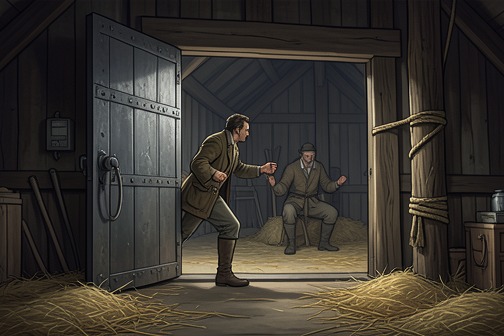
[The rescue at Walker’s barn](entity:event-recall-event-the-rescue-at-walker-s-6756cbe0b16d) is the decisive reversal in the pursuit of [Cal Murphy](entity:character-recall-character-cal-murphy-928376f1e444) and [Kelly Mendoza](entity:character-recall-character-kelly-mendoza-dcd2c2184a61). [Sheriff Jones](entity:character-recall-character-sheriff-jones-4b82540aea31) sends [Jake Dawkins](entity:character-recall-character-jake-dawkins-2bed3f38985c) to [Buddy Walker](entity:character-recall-character-buddy-walker-6bfab5255c83)’s property under the pretense of investigating a disturbance, but the real objective is to arrest the two reporters on more fabricated charges. Instead, Dawkins’s forced entry leads him to a bound [Federal Bureau of Investigation](entity:organization-recall-organization-federal-bureau-o-f1c5664278d2) agent, while Cal and Kelly are released from captivity and later found by Guy Thompson. The episode changes the value at stake from the reporters’ immediate imprisonment to a dangerous, uncertain freedom and reveals that the apparent local crime story is entangled with a federal operation.
## Causes and Background
The raid grows out of the campaign against Cal Murphy and Kelly Mendoza after they continue investigating the suspicious deaths of three young men despite official insistence that the victims merely overdosed. Sheriff Jones dismisses the deaths as drug overdoses, identifies [Devin Reid](entity:character-recall-character-devin-reid-c6af22fb75f9) as the third victim, and says methamphetamine was found at all three scenes; he nevertheless insists that suspicion is not evidence. The official account is therefore presented as settled before toxicology reports return, while the reporters’ questions threaten the town’s preferred version of events.
The pressure reaches Cal directly when he is arrested on trumped-up charges of possessing an open container and driving under the influence. Cal knows the charges will not withstand scrutiny: he rarely drinks and had not been driving with alcohol in his car. He understands the arrest as a bullying tactic intended to stop his inquiry, and his confinement makes clear that the secret he is approaching is more threatening to powerful people than the supposed offenses themselves.
[The Register](entity:organization-recall-organization-the-register-f0a1d26cd658) is also part of the pressure system. Guy Thompson first orders Cal to go to the sheriff’s office and report back, insisting that Kelly remain with him so the paper can obtain a dominant photograph for [Wednesday](entity:time-recall-time-wednesday-c0d2d52cbe23)’s edition. Later, however, Guy complains that the town wants only funeral arrangements and flowers for the dead boys’ families, and he orders Cal to write a reaction piece instead of the investigative story he is pursuing. The rescue thus follows a conflict over both physical liberty and control of information: Cal and Kelly are being obstructed by the sheriff’s department while their own editor is being pushed toward a safer, less consequential version of the news.
## The Raid on Walker’s Property
Jake Dawkins arrives at Walker’s house with rookie deputy [Willie Warren](entity:character-recall-character-willie-warren-ebcc4c017537) after Sheriff Jones radios about a supposed disturbance. Dawkins and Warren have just been eating ribs from [Ray-Ray’s](entity:location-recall-location-ray-ray-s-84569646c06b) when the call comes, and Dawkins initially has no reason to believe the situation is dangerous. Only after he is in the patrol car does Jones tell him that the disturbance is actually the location of [Statenville](entity:location-recall-location-statenville-9cba88c84180)’s most wanted fugitive, Cal Murphy, and that Cal and Kelly are about to be arrested on another set of fabricated charges.
The law-enforcement response is staged as intimidation as much as procedure. Dawkins takes his time leaving the car, while Warren circles behind the house to prevent escape. Because Warren does not know Cal or Kelly, he draws his gun so the fugitives will understand that the deputies are serious. The scene turns the ordinary machinery of a local arrest into an armed confrontation, even though the officers have been given no evidence that the occupants pose a danger.
Inside the house, Cal and Kelly hear pounding on an exterior door. Their mouths are covered, their movement is restricted, and their muffled screams continue while Dawkins waits outside. Dawkins becomes concerned that the prolonged tension may cause Warren to do something foolish, so he retrieves a battering ram. He needs three heavy blows to break open the door, then rushes inside with his weapon drawn; Warren follows, handling his gun as if this is his first potentially combative situation, which it is.
The officers search the house after hearing what sounds like two minutes of pleas for help. They find no one in the rooms on either side of the hall, and the search becomes a tense sequence of delay, uncertainty, and misdirection. When Dawkins finally flings open the relevant door, Cal and Kelly do not know whether the person entering will be their savior or another tormentor. The text holds their fear at the threshold, making rescue itself an ambiguous prospect before the identity of the captive is disclosed.
## The Federal Agent and the Reversal
Dawkins finds an unfamiliar man lying on the floor in darkness. The man is bound with duct tape at the hands and feet, and another strip covers his mouth. Dawkins removes the tape and asks who he is and what he is doing there. The man identifies himself as special agent [Chris Cooper](entity:character-recall-character-chris-cooper-0da6ea9d2eb7) from the Federal Bureau of Investigation and demands help getting up.
This discovery abruptly changes the meaning of the raid. Dawkins had arrived believing he was pursuing Cal and Kelly as local fugitives, but the person he finds restrained inside Walker’s house is a federal agent. The supposed disturbance is therefore connected to an operation larger than the sheriff’s stated purpose. Cooper’s presence also complicates the distinction between rescuer and prisoner: the raid liberates an agent who may know more than the deputies, but it does not immediately explain whether Cooper was investigating Walker, working with him, or using the property for another purpose.
Dawkins refuses to accept Cooper’s request without an answer to his second question. Cooper later leaves in a Cadillac Escalade, and Dawkins watches the vehicle’s taillights disappear from the front yard. The agent’s arrogance angers him, particularly because Cooper has mocked, lied to, and humiliated him after Dawkins untied him. Yet Dawkins does not need a definitive confession to grasp the crucial fact. He realizes that Walker is also a federal agent. The rescue therefore supplies not a neat resolution but a new map of the conspiracy, with federal identities concealed inside the same setting where local authorities are attempting to silence reporters.
## Cal and Kelly’s Release
While Dawkins and Warren are trying to locate the source of the screams, Cal and Kelly remain immobilized and uncertain about what will happen next. Cal chooses not to fight Buddy Walker, deciding that pleas for mercy are more useful than lectures about his mistreatment. Walker appears interested in removing the reporters temporarily from the investigation rather than killing them, since he has had opportunities to cause greater harm but repeatedly chooses restraint. That apparent mercy puzzles Cal, because it does not fit the violence and coercion surrounding their abduction.
The value shift occurs when the door opens and the threat of continued captivity is broken. The evidence presents Dawkins’s intervention as the immediate cause of the reporters’ release, even though the person he encounters first is Chris Cooper rather than Cal or Kelly. Their confinement has been made part of a layered deception: local officers believe they are conducting an arrest, the reporters fear another assault, and the federal presence is hidden in the house. The result is freedom without safety, because the rescue exposes the existence of forces that remain beyond the reporters’ control.
The event also places Cal and Kelly’s relationship under pressure without separating them. They are held together, hear the same pounding, endure the same uncertainty, and face the door as a pair. Their shared captivity reinforces the investigative partnership that authorities and their opponents are trying to disrupt. Escape from the room does not end the danger; it confirms that their questions have drawn them into a conflict in which arrest, abduction, and official investigation can be made to look alike.
## Aftermath and Narrative Significance
The immediate aftermath produces two different kinds of rescue. Dawkins frees Chris Cooper from physical restraints, while Guy Thompson later frees Cal and Kelly from the same coercive scene. Cal has been frightened throughout the day about his next encounter with Guy, but when Guy bursts through the door, fear gives way to relief. Guy tears the duct tape from both reporters’ mouths, and Cal embraces him in gratitude even though Guy does not seem to welcome the embrace in the tense circumstances.
Guy’s arrival restores the pair to the newspaper, but not to their former assumptions about the institution that employs them. His first response is to ask what they have gotten themselves into, recalling that he had earlier demanded a harmless reaction piece and warned them against producing an investigation that might anger the sheriff and publisher. The rescue therefore does not erase the editorial conflict; it brings the endangered reporters back into the information system that has already tried to contain them.
The event’s larger consequence is its connection to the later public circulation of Cal’s reporting. A story by Calvin J. Murphy appears in two newspapers the next day, showing that the reporters’ experience eventually reaches print despite arrests, threats, captivity, and editorial resistance. Earlier, an anonymous letter had warned Cal to keep the events of the previous night secret, avoid telling Kelly or Guy, and create a cover story, while promising national attention if he obeyed and threatening other forms of persuasion if he did not. Against that demand for silence, the rescue becomes part of the chain by which concealed violence and competing authorities move toward publication.
As an event in the novel’s discourse, the raid is presented through interrupted perspectives and withheld recognition. Cal and Kelly hear the rescue before they see its agent; Dawkins enters expecting a fugitive arrest but finds a bound federal operative; Cooper’s identity answers one question while creating another about Walker. The sequence converts an apparently local police action into evidence of systemic concealment. Its final significance lies in that reversal: the authorities who claim to be restoring order instead reveal that order has been constructed through false charges, controlled narratives, hidden agents, and the forcible removal of witnesses.
Event 9
The Statenville law-enforcement consolidation
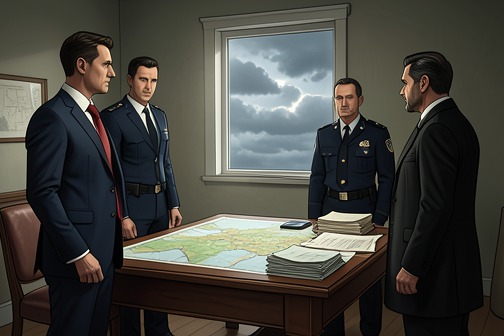
[The Statenville law-enforcement consolidation](entity:event-recall-event-the-statenville-law-enf-59a2ed5424bc) was Mayor [Nathan Gold](entity:character-recall-character-nathan-gold-7365a72de97d)’s defining administrative achievement: the joint consolidation of the [Statenville Police Department](entity:organization-recall-organization-statenville-poli-364913595a0a) with the [Brooks County Sheriff’s Department](entity:organization-recall-organization-brooks-county-sh-90413c5bb190). It reduced duplication and increased the local force’s resources, but it also concentrated police power under officials whose authority became central to protecting [Statenville](entity:location-recall-location-statenville-9cba88c84180)’s prosperity and concealing the truth about the deaths of three young men.
## Origins and Public Justification
The consolidation began after Gold assumed office twelve years before the investigation into the three deaths, at a time when Statenville had no term limits for its mayor. During the first years of his administration, economic recession was seldom invoked as a basis for local, state, or federal decisions. Gold’s restructuring therefore appeared less like an emergency measure than a long-range political design. More than a decade later, however, its results made him look either visionary or controlling, depending on the observer’s judgment.
The public case for the merger rested on efficiency. Statenville had a small population in which most residents obeyed the law, so eliminating needless officers and consolidating resources seemed practical. The arrangement also gave the sheriff more assets and greater control, benefits [Hunter Jones](entity:character-recall-character-hunter-jones-f22b941087c5) openly welcomed. Although some locals continued to debate the reasons for the move, the unified department was difficult to challenge while Statenville was thriving even in a weak economy.
Gold’s political success was tied to [Cloverdale Industries](entity:location-recall-location-cloverdale-industrie-00e2be007fa9), Statenville’s major export business. The company was turning the town into a boomtown while neighboring cities in other counties struggled to survive. Prosperity made the consolidation look like evidence of competent government: the same structure that concentrated law-enforcement power also stood beside the economic system that gave residents a reason to defend the town’s reputation.
## A Unified Force in Practice
The consolidation changed more than the administrative map. It placed greater law-enforcement capacity and authority in the hands of Sheriff Hunter Jones, who could operate with the confidence that came from controlling a larger combined department. When [Cal Murphy](entity:character-recall-character-cal-murphy-928376f1e444) and [Kelly Mendoza](entity:character-recall-character-kelly-mendoza-dcd2c2184a61) arrived at the [Brooks County](entity:location-recall-location-brooks-county-91200e26fa39) Sheriff’s Office, three storefronts from [The Register](entity:organization-recall-organization-the-register-f0a1d26cd658), Jones met them with deliberate indifference, his boots on the desk and a toothpick between his teeth. The scene made the merger tangible: the reporters were not confronting a distant bureaucracy but a locally empowered official who could decide how much of the town’s official story they were permitted to hear.
Jones refused to treat the three deaths as murders. He identified the third victim as [Devin Reid](entity:character-recall-character-devin-reid-c6af22fb75f9), the son of Jim Reid, but insisted that all three had died from simple drug overdoses. When Cal questioned the likelihood of three deaths within twenty-four hours, Jones acknowledged that the pattern was suspicious while maintaining that suspicion alone could not secure a conviction. The distinction allowed him to sound procedural without opening the investigation to scrutiny.
The department likewise controlled the flow of medical evidence. Jones said that the toxicology reports would not return from [Boise](entity:location-recall-location-boise-c983dd657700) for at least two weeks, while disclosing that meth had been found at all three scenes. The apparent disclosure offered a usable detail, but its timing and limits also discouraged deeper questioning. Later, when Kevin Mendoza indicated that the victims had not ultimately died from the expected cause, an authoritative voice abruptly insisted that they had overdosed and ordered the toxicology screens canceled. The handling of the deaths shows how the consolidated force could shape not only enforcement but also the official definition of an event.
## Coercion and the Local Exception
The unified authority became more coercive when Cal Murphy’s reporting approached the interests of powerful people. He was kidnapped and told that cooperation was in his best interest, recognizing that the mystery surrounding the three Statenville deaths was dangerous enough that he needed answers before he was killed. Afterward, local authorities used possession of an open container and driving under the influence as trumped-up charges. Cal knew neither charge was genuine, yet the arrest worked as a practical punishment and warning even if it would not survive a proper court of law.
Dawkins booked Cal, took his mug shot, and mocked him throughout the process. Because Statenville had few attorneys, Cal had no obvious local path to a defense. His arrest thus placed him inside a legal structure that could impose immediate consequences without relying on a credible case. The town’s recent history intensified the contrast: the jail usually held drifters and drunks for no more than twenty-four hours, while serious criminals were transferred to Boise; Cal’s detention marked him as a special threat because of what he was close to uncovering.
The consolidation also supported force beyond ordinary arrest procedures. At Cloverdale Industries, security personnel received an order to shoot two suspected intruders, a man and a woman believed to be Cal and Kelly. [Mel Davis](entity:character-recall-character-mel-davis-99311fc67a8c), head of the company’s security operation, privately questioned why a mid-level marketing company required such extreme protection, but managers silenced those concerns by invoking corporate espionage. The order revealed the overlap between public authority and private power: the town’s security culture treated the protection of Cloverdale’s interests as sufficient reason to suspend restraint.
## Conflict with Federal Authority
The same local system resisted outside investigation. When Deputy Dawkins demanded to see Agent [Chris Cooper](entity:character-recall-character-chris-cooper-0da6ea9d2eb7)’s badge, the FBI agent produced official credentials, but the exchange did not resolve the conflict. Dawkins threatened to obtain a search warrant for Walker’s house through Judge Johnson, his uncle, and asserted that local law was sovereign within Statenville. Cooper warned that Dawkins did not understand whom he was confronting and that jeopardizing the federal operation would have consequences; Dawkins answered that the FBI would not simply walk over local law enforcement in his town.
This confrontation exposed the consolidation’s political meaning. The city-county force was not merely an economical service arrangement. It was also a territorial claim, allowing local officials to treat external oversight as an intrusion. Yet the federal operation ultimately demonstrated the limits of that claim. After meeting Cal and Kelly, the FBI placed a sniper and a tactical team overlooking Gold’s favored dumping ground at [Cold River Canyon](entity:location-recall-location-cold-river-canyon-45cd976bddfc). Kelly’s [iPhone](entity:object-recall-object-iphone-91bdf16e51de), secretly retained and left on an open line, recorded the confrontation and allowed the team to respond to events as they unfolded.
## Consequences and Significance
Gold’s consolidation helped produce the image of a peaceful, successful Statenville. It made the town appear orderly, supplied Hunter Jones with greater control, and supported the political narrative that efficiency and prosperity justified centralization. But the same concentration of power enabled officials to redefine suspicious deaths as overdoses, manipulate the movement of evidence, arrest a reporter on false grounds, and rely on threats when ordinary legal procedures became inconvenient.
Its deepest consequence was therefore institutional rather than merely administrative. The merger joined public law enforcement to a local power structure shaped by Gold and economically dependent on Cloverdale Industries. By the time the FBI intervened, the distinction between lawful protection and coercive concealment had nearly disappeared. Gold’s gun pointed at Guy Thompson, and the shoot-to-kill order at Cloverdale, belong to the same larger logic: once authority is centralized and accountability is weakened, the language of public safety can authorize actions that place citizens outside ordinary legal protection.
The consolidation is consequently one of the novel’s clearest examples of how corruption becomes routine. It does not begin with an openly criminal declaration. It begins with fewer officers, more resources, a prosperous town, and a mayor who appears successful. Its danger emerges later, when the institution created for efficiency gives local officials the capacity to decide which deaths count as accidents, which questions count as unacceptable, which arrests count as warnings, and who may enter or leave the law’s protection.
Event 10
The BCH Homes rezoning conflict
[The BCH Homes rezoning conflict](entity:event-recall-event-the-bch-homes-rezoning-1fc252f5d190) is the public political dispute that gives [Cal Murphy](entity:character-recall-character-cal-murphy-928376f1e444) and [Kelly Mendoza](entity:character-recall-character-kelly-mendoza-dcd2c2184a61) their first plausible connection between [Statenville](entity:location-recall-location-statenville-9cba88c84180)’s development boom and the deaths of three local teenagers. What initially appears to be an ordinary city-council fight over farmland gradually becomes a map of local interests, concealed pressure, and the town’s willingness to convert troubling evidence into a harmless official story.
## Causes and Background
The conflict centered on property owned by [BCH Homes](entity:organization-recall-organization-bch-homes-8290f9a04873), a [Boise](entity:location-recall-location-boise-c983dd657700) developer seeking to have land rezoned from agricultural use. The company intended to build a 100-home subdivision, anticipating that a new pulpwood plant might relocate to Statenville within eighteen months and create demand for additional housing. The proposal therefore joined two forms of promised prosperity: industrial growth and residential expansion. To BCH Homes, the agricultural designation represented an obstacle to a profitable opportunity; to opponents, it threatened both the character and value of existing properties.
The dispute became contentious at a Statenville city-council meeting. Several local men and women objected to the rezoning because they believed the subdivision would damage their property values. Their objections were recorded in an article by Guy Thompson for [The Register](entity:organization-recall-organization-the-register-f0a1d26cd658), whose headline identified the confrontation as “Boise Developer, City Clash.” On the surface, the article was standard local reporting: it described a development proposal, quoted residents, and documented disagreement over land use. Its later importance came not from any explicit accusation in the article, but from the names attached to the opposition.
## The Link to the Three Deaths
Cal and Kelly revisited the dispute while eating at [Ray-Ray’s](entity:location-recall-location-ray-ray-s-84569646c06b). Kelly had found a two-week-old copy of The Register folded on her desk so that only the headline showed, leaving open the possibility that someone had placed it there as a hint, although she could not know whether the placement was deliberate or coincidental. She showed the article to Cal, who had missed it while covering the end of the summer city softball league tournament.
Kelly then circled three surnames in the article: Murray, Reid, and Gold. Those were the family names of the three teenagers who had died. The pattern transformed a routine zoning article into a possible warning. Kelly’s inference was not yet proof that the developer or anyone connected to the rezoning had ordered violence, and Cal immediately tested the theory against the article’s limitations. At least two other people had also been quoted without losing family members, and he questioned why an alleged killer would target the sons of outspoken residents rather than pressure the city commissioners directly. The exchange established the conflict as an investigative lead, not a solved motive.
The three deaths had already been given a deceptively simple official explanation. [Sheriff Jones](entity:character-recall-character-sheriff-jones-4b82540aea31) referred to [Devin Reid](entity:character-recall-character-devin-reid-c6af22fb75f9), Jim Reid’s son, as the third victim and objected when Cal called the deaths murders, insisting that all three had died from a drug overdose. Jones said meth had been found at each scene, while claiming that the toxicology reports would not return from Boise for at least two weeks. The language of suspicion and proof allowed the sheriff to acknowledge just enough information to discourage further questioning while denying the reporters a murder narrative.
## Investigation and Pressure
The rezoning dispute nevertheless gave Cal and Kelly a concrete reason to keep asking questions. Cal proposed calling the other people mentioned in Guy’s article, and he began with Brady Perkins, the farmer who had sold the land to BCH Homes. Perkins said he believed he had been selling to another farmer and that BCH Homes had posed as a buyer under false pretenses. He also lamented that valuable Idaho topsoil would be covered with pavement. His remarks placed the conflict on both ethical and personal ground: the sale involved alleged deception, the loss of farmland, and the resentment directed at a local seller who had transferred property to an outsider.
Cal could not determine whether Perkins’s indignation was wholly sincere or partly an effort to avoid the community’s growing disdain for him. That uncertainty mattered because the rezoning controversy contained several competing interests rather than a single clear victim. The developer wanted construction, the city anticipated growth, residents feared diminished property values, and Perkins faced criticism for the sale itself. The same public disagreement could therefore serve as a genuine civic dispute, a source of leverage, or a cover for more dangerous activity.
As Cal and Kelly continued their inquiry, the town’s institutions responded by narrowing the space in which the reporters could work. Sheriff Jones treated the deaths as overdoses, while Kevin Mendoza was pressured to state that the victims had overdosed even though his initial findings indicated that they had bled to death and that the toxicology screens had not yet established an overdose. Cal’s arrest on fabricated charges of possessing an open container and driving under the influence made the institutional pressure explicit. He knew the charges would not survive a proper court proceeding, but recognized that Statenville’s authorities could still use them to intimidate him.
## Consequences and Significance
The rezoning conflict never functions as a self-contained political subplot. It becomes the first visible edge of Statenville’s hidden power structure, connecting the public language of growth with the private consequences of resistance. The deaths of the Murray, Reid, and Gold teenagers make the land dispute appear more than coincidental, even though the available evidence initially remains circumstantial. The investigation’s central tension arises from that gap: a pattern is visible to the reporters, while the sheriff’s department controls the official vocabulary used to describe it.
The dispute also reveals how local prosperity can make accountability difficult. A prospective subdivision tied to a possible pulpwood plant offers a persuasive story about jobs, homes, and expansion, while opposition can be dismissed as fear of change or anxiety over property values. Yet the same development pressure produces suspicion because the affected families include the relatives of three dead students. The conflict’s force lies in this contrast between ordinary civic language and extraordinary consequences.
By the time Cal is placed behind bars, he understands that his investigation has threatened people more powerful than the apparent drug-overdose explanation suggests. The rezoning controversy is therefore a narrative hinge: it leads from a newspaper article and a city-council dispute toward the buried causes of the deaths, while showing that in Statenville information is managed through headlines, official reports, delayed toxicology, coerced statements, and criminal charges. What looks like a fight over agricultural land becomes evidence that the town’s prosperity may depend on keeping its most damaging connections out of public view.
Event 11
FBI Statenville undercover operation
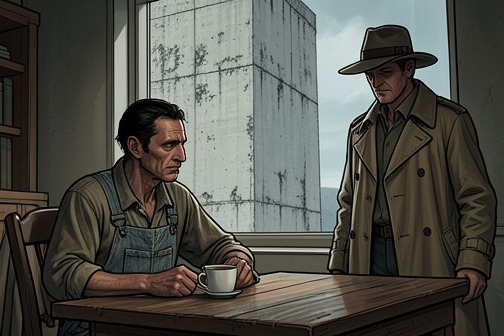
The [FBI Statenville undercover operation](entity:event-recall-event-fbi-statenville-underco-2b39801fa3bc) is the federal investigation that infiltrates [Statenville](entity:location-recall-location-statenville-9cba88c84180) and [Cloverdale Industries](entity:location-recall-location-cloverdale-industrie-00e2be007fa9) through [Buddy Walker](entity:character-recall-character-buddy-walker-6bfab5255c83) and [Elliott Mercer](entity:character-recall-character-elliott-mercer-8b2e2f857624), who pose as ordinary residents while gathering prosecutable evidence against [Nathan Gold](entity:character-recall-character-nathan-gold-7365a72de97d) and the wider network supporting his drug business. The operation begins as a patient effort to penetrate an insulated criminal system and ends by exposing its reach, its political protection, and the disastrous [CPZ](entity:object-recall-object-cpz-fb4f361990d1) marker experiment that killed three young athletes.
## Origins and Target
The operation grows out of the FBI’s pursuit of Nathan Gold, whose former identity was Carmen Deangelo. While working in [Boston](entity:location-recall-location-boston-aded649f4602) as a captain for the [Scarelli family](entity:character-recall-character-scarelli-family-87c4def82b3f), Deangelo was associated with more than a dozen murders marked by a distinctive nineteenth-century gold coin placed in each victim’s mouth. The FBI assumed for roughly twelve years that he had disappeared or been killed, but the signature resurfaced in [Portland](entity:location-recall-location-portland-1d591afddc1c) when the nineteen-year-old son of Senator Tom Brazenworth was murdered. That victim was not a rival mob member, making the case too prominent to dismiss, and investigators traced the signature back to Deangelo’s new identity in Statenville.
Rumors then connected the town to an industrial-scale drug operation whose products moved through the Pacific Northwest, as far north as Vancouver, Canada, and east as far as Denver. Statenville’s apparent ordinariness helped protect it: most federal personnel in the Salt Lake field office barely knew where it was, and its public reputation centered on agricultural life, drunk-driving arrests, and occasional meth labs rather than commercial drug production. Once the FBI confirmed that Deangelo was living as Gold, it selected Statenville as the site for a deep-cover investigation into both the Cloverdale Industries operation and the people who sold and transported its drugs across state lines.
## Infiltration and Evidence Gathering
Buddy Walker and Elliott Mercer entered Statenville with carefully manufactured identities, impeccable apparent résumés, and backgrounds vetted by the FBI. Their files even contained a few minor encounters with the law so that Nathan Gold would not find them unnaturally clean. The deception worked because Gold enforced rigorous background checks and believed that every Cloverdale employee understood the organization’s protected secret. Walker, presented as an innocent basketball coach who needed extra work to support his elderly mother, passed scrutiny without raising suspicion.
The two agents spent five years accumulating information about the location and movements of Cloverdale Industries. The operation was not designed merely to arrest Gold. The FBI wanted a case against the entire network, including the people who distributed Cloverdale’s drugs on city streets and carried them across state boundaries. That objective explains the investigation’s deliberate pace and its emphasis on evidence rather than rumor. It also made the agents dependent on continued access to a town whose institutions, employees, and paid enforcers were organized to prevent outsiders from learning how the system worked.
Elliott Mercer advanced the operation by manipulating the search for Walker after Walker became endangered. He supplied a misleading tip that sent the search party across the county and then learned the procedures of the Statenville Sheriff’s Department, including its response to a major security breach. After passing a deliberately designed trust test, Mercer gained access to increasingly sensitive information and eventually learned the central secret of Statenville. He and Walker concluded that the town’s leaders were functioning as a mob-like drug organization and resolved to expose it rather than allow Cloverdale Industries to remain the Pacific Northwest’s dominant supplier.
## The Marker Program and Its Ethical Collapse
The investigation becomes entangled with CPZ, a chemical marker once considered for use in tracing drug distribution. The proposed federal program would place CPZ in selected drug doses so that unusual medical cases could alert the [Centers for Disease Control and Prevention](entity:organization-recall-organization-centers-for-dise-242754e055e8), allowing the FBI to gather information about the geographic spread of a dealer’s network. Field tests in [Seattle](entity:location-recall-location-seattle-ec620f372076), Los Angeles, and Phoenix in 2008 ended after the tainted users died, and the program was officially abandoned.
The earlier research also carried a warning that the agents did not adequately respect. Animals subjected to the chemical suffered extreme reactions: monkeys nearly tore themselves apart, while dogs scratched and clawed themselves to death. Officials judged the method theoretically useful but ethically unacceptable for human testing. Walker nevertheless believed his chemistry training gave him enough understanding to improve on the bureau’s conclusion. He persuaded Mercer to let him insert chemical markers into Cloverdale drug batches, even after Mercer warned him about the risks.
The first attempts were ineffective because Walker used too little chemical to trace an entire shipment or trigger the desired alert. He then found a batch of drugs in [Riley Gold](entity:character-recall-character-riley-gold-084ece358650)’s car and treated it as a more controllable opportunity. Knowing that several members of Riley’s basketball team had begun using drugs, Walker selected Riley as an easy observation point and expected to track him and other teammates. He failed to account for the possibility that his compound could kill them. The result was the death of three Statenville high-school football stars, whose deaths were publicly described as meth overdoses even though the marker, rather than methamphetamine itself, caused the fatal reactions.
## Exposure, Breakdown, and Aftermath
The deaths brought the undercover operation into direct conflict with Statenville’s protective machinery. Nathan Gold controlled the town through obedience, money, and fear, while local officials helped preserve the appearance of accidental overdose. The FBI’s investigation eventually established that the coroner’s office had been pressured to issue falsified reports. Independent examination later identified the chemical markers as the actual cause of death and clarified that the intended marker was supposed to produce an apparent rare disease and an investigative alert, not fatal poisoning.
Walker’s impatience damaged the operation at precisely the moment when it needed discipline. His attempt to create an unmistakable federal signal turned an intelligence-gathering technique into an unauthorized human experiment, and the resulting deaths threatened both the victims’ families and the agents’ cover. Mercer, who had participated in the marker work, became the surviving source of incriminating information about Gold and the only living person who had played a role in the death of Gold’s son. He tried to distance himself from Walker and sought [Cal Murphy](entity:character-recall-character-cal-murphy-928376f1e444)’s help in shaping the public account so that Mercer would appear as a hero rather than as a participant in the wrongdoing.
The operation finally reaches its violent climax in the FBI’s covert attempt to obtain a confession from Gold. Gold killed Elliott Mercer with two gunshots and pushed him from a cliff into [Cold River Canyon](entity:location-recall-location-cold-river-canyon-45cd976bddfc). Rather than face charges, Gold then plunged into the canyon himself. The federal investigation nevertheless achieved its central institutional result: FBI officials seized control of Cloverdale Industries and shut down its operations while the bureau continued investigating the alleged drug-making plant. Through the subsequent reporting by Cal Murphy and [Kelly Mendoza](entity:character-recall-character-kelly-mendoza-dcd2c2184a61), the operation also connected Statenville’s hidden drug economy to distribution in [Salt Lake City](entity:location-recall-location-salt-lake-city-858c034c1641) and to a broader regional network.
## Significance
The FBI Statenville undercover operation exposes a criminal structure that survives not because it is invisible, but because local prosperity, institutional silence, and purchased loyalty make its visibility seem harmless. Gold pays people to preserve the town’s sleepy image, and even Guy Thompson accepts regular brown paper bags containing one hundred twenty-dollar bills in exchange for not investigating Statenville’s secret. The federal operation therefore confronts more than a single drug manufacturer: it confronts a social system in which employment, public order, law enforcement, and civic pride have been made dependent on concealment.
Its moral significance is deliberately unstable. The FBI enters the town to gather evidence and dismantle a criminal network, yet one of its own agents revives a discontinued chemical program and places civilians at lethal risk. The operation reveals the truth about Gold and Cloverdale Industries, but it also reveals how easily an investigative purpose can be corrupted by institutional ambition, impatience, and the desire for an “epic headline.” Its final achievement is consequently double-edged: the conspiracy is exposed and Cloverdale Industries is shut down, but the evidence is inseparable from the deaths caused by the methods used to obtain it.
Event 12
CPZ毒品标记计划
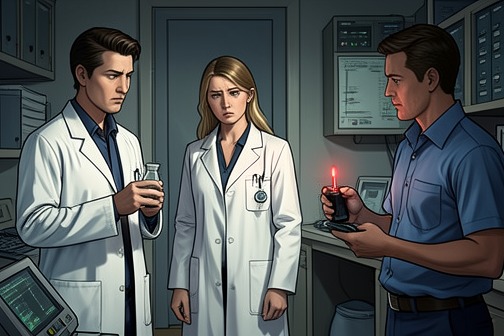
The [CPZ marker program](entity:action-recall-action-fbi-cpz-cbbe6de57047) was an FBI effort to make drug networks visible by adding a chemical marker to individual doses. Designed to alert the [Centers for Disease Control and Prevention](entity:organization-recall-organization-centers-for-dise-242754e055e8) and help investigators map distribution, the program was abandoned after field tests killed every tested user. Its suppressed history later became inseparable from the [Statenville](entity:location-recall-location-statenville-9cba88c84180) conspiracy, when Walker revived the technique, inserted the marker into methamphetamine, and helped cause the deaths the investigation was meant to explain.
## Purpose and Design
The program sought to identify drug users and major dealers by marking drugs chemically rather than tracking every transaction directly. A marked dose could produce an unusual medical case, sending an alert to the Centers for Disease Control and Prevention; the [Federal Bureau of Investigation](entity:organization-recall-organization-federal-bureau-o-f1c5664278d2) could then obtain basic information about the geographic spread of a dealer’s network. The method promised to convert an invisible distribution system into a chain of detectable signals, linking chemistry, public-health surveillance, and criminal investigation.
The proposal was especially attractive because it aimed at the network rather than a single shipment. If investigators could recognize where marked drugs were consumed, they could infer how a dealer’s product moved through communities and across distribution routes. The program therefore treated individual users as indicators within a larger map, making the human body the point at which an illicit supply chain became legible to federal authorities.
## Field Tests and Abandonment
In 2008, undercover operatives tested the method in [Seattle](entity:location-recall-location-seattle-ec620f372076), Los Angeles, and Phoenix by tainting individual doses. Each drug user died, although the report available to [Cal Murphy](entity:character-recall-character-cal-murphy-928376f1e444) did not specify the cause. The deaths ended the program, not because the surveillance objective had become irrelevant, but because the method’s human cost made continued testing publicly and institutionally untenable.
The earlier research had already exposed the danger. Animal testing produced horrific results: monkeys nearly tore themselves apart before dying, while dogs scratched and clawed themselves to death. Officials concluded that the marker was an intriguing idea in theory but failed the ethical standard required for human testing. The program’s history thus contains a sharp contradiction: its investigative logic depended on generating evidence through exposure, while its own tests demonstrated that the exposure could be fatal.
## Revival in Statenville
The abandoned research later entered the covert operation surrounding [Cloverdale Industries](entity:location-recall-location-cloverdale-industrie-00e2be007fa9). Walker and Mercer were Federal Bureau of Investigation agents embedded in Statenville under deep cover, posing as ordinary employees while collecting evidence against Gold and the wider drug network. Their mission was not limited to identifying Gold; the bureau also wanted to reach the people who sold and transported Cloverdale’s drugs across the Northwest.
Walker became impatient with the slow accumulation of evidence. He began experimenting with chemical formulas that could tag drug batches, and Mercer urged him to abandon the idea because the FBI had already shut the research program down. Walker persisted until Mercer relented. Early attempts failed to mark enough of a shipment to reveal its distribution, and the quantity required to trigger a public-health alert could not be controlled once mixed into a larger batch.
Walker then found drugs in [Riley Gold](entity:character-recall-character-riley-gold-084ece358650)’s car and chose them as the vehicle for the marker. Because the coaching staff knew that several players had recently begun using drugs, Riley appeared to Walker to be an accessible subject whose behavior could be observed along with that of his teammates. Walker intended to monitor the resulting distribution, but he failed to reckon with the possibility that his compound would kill the people who consumed it. The abandoned program was thereby transformed from a federal tracking experiment into an unauthorized human experiment conducted inside a criminal investigation.
## Consequences and Significance
The [CPZ](entity:object-recall-object-cpz-fb4f361990d1) marker became embedded in the bottle Cal Murphy and [Kelly Mendoza](entity:character-recall-character-kelly-mendoza-dcd2c2184a61) discovered: a container labeled “Clean and Clear” that held white crystals instead of cleaning liquid. Kelly identified the substance as crystal methamphetamine, connecting the apparently ordinary package to the lethal drug operation. The object condensed the program’s central inversion: a technology devised to expose narcotics networks had become part of the narcotics supply itself.
The deaths of Statenville’s young people were not simply the result of an abstractly dangerous chemical. They arose from overlapping decisions and structures: the FBI’s earlier research, the bureau’s decision to place Walker and Mercer inside Cloverdale Industries, Walker’s impatience, Mercer’s warnings, the concealment surrounding Cloverdale, and the willingness of local power brokers to suppress the truth. Gold’s control of Statenville depended on keeping the town’s secret hidden, while the agents’ operation depended on gathering evidence without exposing themselves. CPZ moved through that conflict as both scientific instrument and evidence of institutional failure.
The program also explains why information in Statenville is repeatedly delayed, redirected, or buried. Cal’s reporting is obstructed by Guy Thompson, who orders him to seek a sheriff’s-office reaction rather than pursue the deeper story; later, Guy reduces his work to a reaction piece even as the investigation points toward something larger. A threatening letter tells Cal Murphy to keep quiet about the attack against him and promises that fuller information will eventually bring national attention, making the control of evidence part of the danger itself. Against that pressure, the CPZ history supplies a causal explanation for the deaths and reveals that the apparent local mystery reaches into a failed federal program, a deep-cover operation, and the drug network run through Cloverdale Industries.
Event 13
Statenville tainted-meth deaths
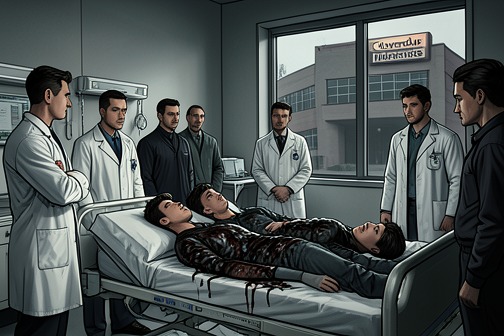
The [Statenville tainted-meth deaths](entity:event-recall-event-f338bde8d387) are the central crime that turns [Statenville](entity:location-recall-location-statenville-9cba88c84180)’s apparent prosperity and small-town calm into a crisis of concealed violence. Three local high-school football stars die in gruesome circumstances after using methamphetamine, and officials initially present the deaths as ordinary overdoses. The later discovery that the victims were killed by a chemical marker added to the drugs—not by the methamphetamine itself—reframes the deaths as the unintended result of an undercover operation corrupted by a rogue [Federal Bureau of Investigation](entity:organization-recall-organization-federal-bureau-o-f1c5664278d2) agent. One victim, [Riley Gold](entity:character-recall-character-riley-gold-084ece358650), is also the son of Deangelo, the criminal figure behind [Cloverdale Industries](entity:location-recall-location-cloverdale-industrie-00e2be007fa9), binding the deaths directly to the town’s drug network and its most powerful family.
## Causes and Background
The deaths arise from a culture in which athletic ambition makes drug use appear practical rather than exceptional. [Cody Murray](entity:character-recall-character-cody-murray-178238e8ae1d), a six-foot scrambling quarterback from a rural Idaho eight-man team who had earned several major scholarship offers, wanted help sustaining his workouts without using steroids. He regarded his chosen stimulant as harmless at first, even though he increasingly used it for pleasure as well as performance. The pressure surrounding young athletes is made explicit by [Mike Miller](entity:character-recall-character-mike-miller-33ee1d54b8ab), who says that Cody’s father laughed when warned about his son’s drug use and replied that if it helped Cody get ahead, he supported it. Miller also explains that methamphetamine seemed attractive because it gave athletes energy to train longer, while college coaches often valued the appearance of physical success more than academic effort. The deaths therefore grow out of a sporting environment that rewards endurance, bodily display, and escape from Statenville, while treating the risks behind that performance as somebody else’s problem.
The immediate technical cause is the FBI’s [CPZ marker program](entity:action-recall-action-fbi-cpz-cbbe6de57047). The intended marker was supposed to be inserted into random batches of drugs so that an apparent disease response would alert the [Centers for Disease Control and Prevention](entity:organization-recall-organization-centers-for-dise-242754e055e8), allowing the FBI to gather information about a dealer’s distribution network. The program had already been tested in 2008 by undercover operatives in [Seattle](entity:location-recall-location-seattle-ec620f372076), Los Angeles, and Phoenix. In each field test, the drug user died, although the report did not identify the cause, and the program was discontinued because of the danger and the publicity it threatened to create.
The abandoned research had also revealed a profound ethical warning. Animals exposed during the testing died in horrific conditions: monkeys nearly tore themselves apart, while dogs scratched and clawed themselves to death. Officials concluded that the idea might work in theory but could not ethically be tested on humans. Despite that conclusion, Walker continued experimenting. His minor in chemistry gave him enough confidence to challenge the bureau’s professional chemists, and [Elliott Mercer](entity:character-recall-character-elliott-mercer-8b2e2f857624) eventually relented after urging him to find another approach. The deaths are thus not simply the result of an accidental laboratory error; they follow a decision to override known evidence about the marker’s lethal potential.
## What Happens
Walker first struggled to make the marker strong enough to trace an entire shipment. He then found a more dangerous opportunity in a batch of drugs inside Riley Gold’s car. Because the coaching staff knew several players had recently begun using drugs, Riley appeared to Walker to be an easy subject to observe, along with any teammates who tried the same supply. Walker did not adequately consider that his compound could kill people, even after Mercer warned him. The chemical was introduced into drugs circulating among the athletes, and the three young men became the human subjects of an unauthorized experiment they had never consented to join.
The resulting deaths are physically distinctive and initially difficult to interpret. The marker forces liver bile rapidly into the bloodstream, producing uncontrollable itching beneath the skin. Already high on methamphetamine, each victim scratches himself to death. When [Cal Murphy](entity:character-recall-character-cal-murphy-928376f1e444) later shows Guy Thompson photographs from the coroner’s office, the images reveal the gruesome nature of the deaths; [Kelly Mendoza](entity:character-recall-character-kelly-mendoza-dcd2c2184a61) concludes that if Walker laced Cloverdale crystal meth with a chemical, the deaths were not accidental. The bodily evidence contradicts the official account long before the institutional explanation becomes available.
The first public version of the event is carefully narrowed. [Sheriff Jones](entity:character-recall-character-sheriff-jones-4b82540aea31) identifies the third victim as [Devin Reid](entity:character-recall-character-devin-reid-c6af22fb75f9), Jim Reid’s son, but rejects the language of murder and insists that all three died from simple drug overdoses. When Cal points out that three deaths occurred within twenty-four hours, Jones answers that suspicion alone cannot secure a conviction. Kelly asks what drugs were involved, and Jones admits that methamphetamine was found at all three scenes, while simultaneously deferring official conclusions until toxicology reports returned from [Boise](entity:location-recall-location-boise-c983dd657700). The exchange establishes how the deaths are managed through partial disclosure: enough information is offered to make the case appear ordinary, while the most threatening interpretation is denied.
The cover story becomes more forceful when Kevin Mendoza states that the victims overdosed even though the toxicology screens had not yet been completed. Kevin’s premature certainty reveals that the cause of death is being imposed rather than discovered. The local authorities later pressure the coroner’s office to issue falsified reports, converting a questionable initial explanation into an official record. What appears to be bureaucratic caution is therefore part of a deliberate effort to prevent the deaths from becoming a murder investigation.
## Investigation and Escalation
Cal Murphy and Kelly Mendoza refuse to accept the overdose explanation. Their investigation places them in direct physical danger: Cal is shot in the right arm during an attack, and Kelly crawls across the ground toward him while trying to get them to the dock. Later, while hiding and searching for evidence, Cal opens a taped box and finds a bottle labeled Clean and Clear that contains white crystals instead of cleaning liquid. Kelly identifies the substance as crystal methamphetamine. The object links the drug operation’s ordinary-looking packaging to the concealed material at the heart of the case.
The investigation also changes from local reporting into a race to preserve evidence. After escaping, Cal and Kelly drive toward [Ellington](entity:location-recall-location-ellington-4c766e03c56e) and stop at a nearly vacant McDonald’s, one of the few places open late at night. Cal uses the improvised workstation to begin organizing the story while Kelly uploads photographs and video to a remote drop box. Between them they have only two iPhones and a camera, so the survival of the evidence depends on speed, redundancy, and publication rather than on official cooperation. Cal’s attachment to Kelly, briefly felt as she embraces him from the rear seat of the motorcycle, exists alongside the recognition that neither of them has the safety or leisure of a cinematic rescue.
The federal background clarifies why the deaths matter beyond Statenville. The FBI had placed Walker and Mercer in deep cover for five years, not merely to arrest Deangelo under the alias Gold, but to build a prosecutable case against the entire Cloverdale Industries operation, including the people who sold and transported its drugs across state lines. Walker wanted a spectacular case and a major public success. His impatience transformed the undercover marker program from a surveillance tool into a lethal intervention, while Mercer became both a participant in the operation and the remaining source of evidence capable of implicating Deangelo.
## Consequences and Aftermath
The deaths destroy the distinction between accidental harm and deliberate wrongdoing. The FBI’s official account says the marker was never intended to be fatal, but Walker engineered the additive so that it would have a deadly effect. His conduct made three local teenagers the victims of a chemical experiment, while the institution that created the program had already known from animal testing that the compound produced catastrophic suffering. Mercer’s warnings, Walker’s persistence, and the decision to use Riley’s drug supply together show how responsibility is distributed across individual ambition, compromised professional judgment, and an undercover system willing to manipulate illicit drugs without the victims’ knowledge.
The deaths also expose the dependence of Statenville’s public order on information control. Residents are told that the student-athletes overdosed on methamphetamine; the coroner’s reports are falsified; and local officials, together with Gold, prefer to call the deaths a coincidence so that the town will not attract unwanted attention. This suppression protects more than a reputation. It protects the economic and political structure surrounding Cloverdale Industries, preserves the image of a peaceful southeastern Idaho community, and prevents the victims’ bodies from revealing the reach of the drug network.
Riley Gold’s death gives the case its most dangerous personal consequence. The victim is not only one of the athletes caught in the experiment but also Deangelo’s son. That connection turns a federal investigation into a threat to the criminal organization’s leader and helps explain the violence that follows. The deaths trigger the pursuit of Cal and Kelly, the attempted destruction or concealment of evidence, and the confrontation that ultimately brings the Cloverdale investigation to its climax. The resulting chain of events includes the killing of Elliott Mercer and Deangelo’s plunge into [Cold River Canyon](entity:location-recall-location-cold-river-canyon-45cd976bddfc) rather than facing federal charges.
## Narrative Significance
The Statenville tainted-meth deaths function as the novel’s hidden hinge: a local tragedy that initially appears to confirm the town’s familiar story about reckless teenagers, then reverses that interpretation by showing that the official explanation itself is part of the crime. The value at stake shifts from ordinary public order to life, truth, and institutional accountability. Every attempt to stabilize the story—as an overdose, a coincidence, or an unfortunate side effect—makes the underlying violence more visible.
The event also connects three forms of bodily pressure. Cody and the other athletes pursue strength and endurance through a sporting culture that treats physical appearance as a route to college opportunity; the chemical marker turns the body into an involuntary tracking device; and the victims’ uncontrollable scratching makes the body the final record of a crime that officials try to erase. The same culture that celebrates athletes for looking powerful leaves little room to acknowledge vulnerability, addiction, fear, or the need for protection.
Finally, the deaths reveal how scientific knowledge, law enforcement, journalism, and criminal enterprise produce competing versions of reality. The marker was designed to generate information about a distribution network, yet the experiment’s uncontrolled human consequences create evidence of a different kind: bodies, photographs, suppressed reports, and the testimony of people who know what was done. The deaths remain the decisive proof that Statenville’s quiet prosperity depends on a system in which dangerous institutions can call violence an accident, and local authorities can call evidence coincidence.
Event 14
Operation Fuego
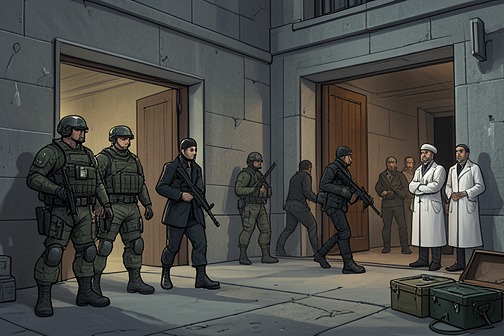
[Operation Fuego](entity:event-recall-event-operation-fuego-f5e44d7fcaa8) is the [Federal Bureau of Investigation](entity:organization-recall-organization-federal-bureau-o-f1c5664278d2)’s planned strike against [Cloverdale Industries](entity:location-recall-location-cloverdale-industrie-00e2be007fa9) and the concealed drug network that sustains [Statenville](entity:location-recall-location-statenville-9cba88c84180)’s prosperity. The operation is significant because it converts years of covert observation into an intended public takedown, while also exposing how thoroughly [Nathan Gold](entity:character-recall-character-nathan-gold-7365a72de97d)’s organization has infiltrated local institutions and prepared to erase evidence when the raid begins to fail.
## Origins and Strategic Purpose
Operation Fuego grew out of an investigation into Nathan Gold, who was actually Carmen Deangelo, a former captain in the [Scarelli crime family](entity:organization-recall-organization-scarelli-crime-f-9610df0e29ab). After a gold coin appeared in the mouth of the nineteen-year-old son of U.S. Senator Tom Brazenworth, federal investigators connected the murder signature to Gold and traced his new identity to Statenville. Rumors described the town as the site of a drug plant capable of commercial production, with vehicles moving product throughout the Northwest while remaining largely undetected. The Federal Bureau of Investigation therefore wanted more than Gold’s arrest: it sought prosecutable evidence against the wider operation, including the people who sold and transported Cloverdale’s drugs across state lines.
[Buddy Walker](entity:character-recall-character-buddy-walker-6bfab5255c83) and [Elliott Mercer](entity:character-recall-character-elliott-mercer-8b2e2f857624) were placed in Statenville under deep cover. Their FBI-created identities included carefully constructed histories and even minor encounters with the law, details intended to satisfy Gold’s scrutiny. Over five years, they assembled what Walker regarded as a small library of information about the location and movement of Gold’s Cloverdale Industries operation. Walker’s assignment had become intolerable to him, but the prospect of an enormous public exposure kept him moving forward. He imagined television crews descending on Statenville and wanted the operation’s collapse badly enough to disregard recognition or personal credit.
Gold’s system was designed to prevent precisely this kind of penetration. He imposed rigorous background checks on Cloverdale employees and warned them that exposure would cost them their paychecks and could send them to federal prison. Yet Walker, presenting himself as a basketball coach who needed a few hours of work to support his elderly mother, passed the screening. His apparent ordinariness became the weakness in Gold’s security structure: the man admitted into every room was the federal threat Gold had failed to identify.
## The Operation Moves Into the Open
The operation’s active phase begins when Walker’s scanner, tuned to the local sheriff’s office, announces an “Code Enfuego” alert along with a description of Walker and his car. The signal confirms that his cover is collapsing and that local authorities are mobilizing against him. Walker is not alone; Elliott Mercer is beside him, and their partnership gives the pursuit a second layer. Mercer has already learned how the Statenville Sheriff’s Department responds to a major security breach, first by sending a misleading tip that pulls Walker’s search party across the county and then by passing a trust test that opens access to deeper local secrets.
By this point, Mercer and Walker are no longer merely collecting information. They have resolved to expose the secret and end Statenville’s position as a major Northwest drug center. Mercer’s knowledge of security procedures and Walker’s familiarity with Cloverdale’s cameras and blind spots allow them to approach the rear of the facility without being seen. They crouch up the ramp, reach a back entrance, and use Walker’s keys to enter. The careful movement gives the scene the logic of a raid: surveillance has been studied, access has been prepared, and the investigators believe the evidence is finally within reach.
## The Empty Warehouse and the Collapse of Fuego
The decisive reversal comes inside the warehouse. Walker opens the door, turns on the lights, and drops his keys; the clank echoes through a space that should have contained the material proof of the operation. Instead, the building is completely bare. The shelving units, boxes, packing tables, forklifts, and every other visible sign of production have disappeared. The warehouse has become not a crime scene crowded with evidence but a cavernous absence.
Walker screams that his plan is disintegrating and insists that “Tonight was the night!” The reaction is more than frustration over a missed arrest. Years of work have been placed on the single moment when the FBI could seize the operation, and without a raid supported by hard evidence, Cloverdale Industries may remain beyond federal reach. Walker and Mercer slump onto the floor, fearing that their field status will be withdrawn and that they will return to analysis and paperwork. Their failure also threatens the larger case, because the FBI wanted to dismantle Gold’s network rather than capture only its visible leader.
Mercer responds practically rather than surrendering. He proposes dividing the facility, with Walker searching for a place capable of housing the missing transformation while Mercer examines the other end of the plant. This decision keeps the operation alive after its central assumption has been disproved. The emptied warehouse indicates that Gold has anticipated the strike, moved the evidence, and turned the FBI’s timing against it. The operation’s title therefore becomes ironic: the planned blaze has not yet consumed Cloverdale; it has illuminated the sophistication of the concealment surrounding it.
## Gold’s Counteroperation
Gold does not wait to discover whether the agents have sent usable evidence to their superiors. He replaces Operation Fuego with Operation Cleanup, a contingency plan prepared for the moment federal investigators breach the network. He assumes that any evidence the agents possess may not have reached the FBI or may be ruled inadmissible in court, and he acts to ensure that no later discovery can repair the case.
Gold’s response reveals the relationship between the town’s political order and its criminal machinery. Running Statenville is easy for him because people obey his instructions, but preserving its secret requires a more intricate web of payments, silence, threats, and violence. Even the regular money delivered to Guy Thompson’s back porch—one hundred twenty-dollar bills in a brown paper bag each month—belongs to this same system of managed complicity. The town’s apparent stability rests on making witnesses passive, employees fearful, and outsiders vulnerable.
The cleanup operation is also a form of evidence manufacture. After Gold’s men secure Walker and Mercer with plastic zip ties, they force both FBI agents to take methamphetamine. Gold intends to plant a narrative that will discredit them: a drugged janitor and a coach accused of giving drugs to students would appear unreliable even if they claimed to be federal agents. The tactic is designed to turn the investigators’ identities into liabilities and to make the state’s own victims appear culpable. Operation Cleanup thus attacks not only bodies but credibility, using manufactured contamination to destroy the evidentiary chain that Operation Fuego was meant to establish.
## Narrative Consequences
Operation Fuego fails as an immediate raid but succeeds as a structural revelation. Its collapse shows that Cloverdale Industries is protected by advance warning, employee secrecy, local law-enforcement access, and a leadership capable of moving an entire warehouse before federal agents arrive. It also exposes the limits of a conventional operation against a network whose criminal activity is embedded in the economy and government of Statenville.
The event connects the federal investigation to the town’s earlier concealments. The same culture that pays Guy Thompson to pretend Statenville is sleepy, suppresses knowledge of [Riley Gold](entity:character-recall-character-riley-gold-084ece358650)’s drug-related death, and treats public prosperity as justification for silence now mobilizes to neutralize federal agents. The white crystals hidden in a bottle labeled “Clean and Clear,” recognized by [Cal Murphy](entity:character-recall-character-cal-murphy-928376f1e444) and [Kelly Mendoza](entity:character-recall-character-kelly-mendoza-dcd2c2184a61) as crystal methamphetamine, provide a related image of deceptive packaging: the surface promises cleanliness while the contents reveal contamination. In Operation Fuego, the warehouse reverses that image. There is no visible contamination because the evidence has been removed, but the emptiness itself proves how deeply the corruption has spread.
The failed raid also forces the conflict into more dangerous spaces. Walker and Mercer’s infiltration, the empty warehouse, Gold’s seizure of the agents, and the later movement through locations such as [Devil’s Canyon](entity:location-recall-location-devil-s-canyon-82dbcae0b5ec), Walker’s barn, and [Cold River Canyon](entity:location-recall-location-cold-river-canyon-45cd976bddfc) turn the investigation into a struggle over who controls access, evidence, and escape. In the barn, dry-erase boards covered with chemical equations suggest the technical infrastructure behind the drug operation; in the remote canyon, the agents’ authority and safety become vulnerable to Gold’s counterattack. Operation Fuego is therefore not a completed victory but the hinge between investigation and open survival conflict. Its failure gives Gold the initiative, while the knowledge gathered by Walker and Mercer keeps the truth from disappearing with the warehouse’s contents.
Event 15
Cal and Kelly Are Kidnapped and Escape
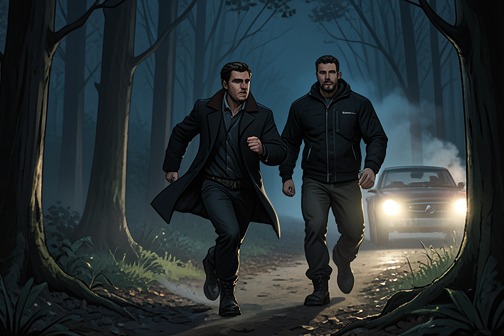
[Cal Murphy](entity:character-recall-character-cal-murphy-928376f1e444) and [Kelly Mendoza](entity:character-recall-character-kelly-mendoza-dcd2c2184a61)’s kidnapping and escape is the decisive reversal in their investigation: the reporters are physically silenced and transported toward death, yet turn the abduction into a narrow flight for survival. Yukon’s assault, carried out to satisfy [Nathan Gold](entity:character-recall-character-nathan-gold-7365a72de97d)’s demand that the pair be disposed of and their evidence confiscated, demonstrates how far the [Statenville](entity:location-recall-location-statenville-9cba88c84180) power structure will go to protect itself. Their escape does not end the danger, but it keeps alive the possibility that the truth about [Cloverdale Industries](entity:location-recall-location-cloverdale-industrie-00e2be007fa9) and the deaths under investigation will reach the public.
## Causes and Background
The kidnapping begins when Cal Murphy is preparing to leave after deciding that he must speak with Guy Thompson and submit his story. A familiar engine roar fills the north parking lot, and Cal recognizes it as the sound associated with the night his car was forced off the road. His recognition transforms an ordinary departure into an emergency. Seeing a long-haired, muscular man climb from a [Ford F-250](entity:object-recall-object-ford-f-250-97a6d9b440e5), Cal abandons the planned conversation and tells Kelly Mendoza to gather her belongings and follow him immediately.
The attacker is [Yukon Grant](entity:character-recall-character-yukon-grant-2fe0c4f9f84e), whose arrival connects the present assault to the earlier road ambush. Cal understands that the danger is not accidental and that the pair’s reporting has placed them in direct conflict with people capable of using violence to suppress it. The immediate stakes are therefore larger than the reporters’ personal safety: their notes and other materials constitute evidence, and their capture offers their opponents a way to erase both witnesses and proof.
## The Abduction
Cal is struck by a forearm and knocked face down onto the pavement just as he is about to put on his helmet. Disoriented, he looks for Kelly and shouts for her to run, but the warning comes too late. Yukon has already lifted her from the ground, holding her in his arms while she struggles and screams. Her resistance is futile against his physical strength, and the scene sharply reverses the balance between the investigators and their pursuer.
Yukon then orders Cal to get up and invokes a deadline, making the assault sound like a task governed by schedule rather than a crime committed against two people. He carries Cal around the restaurant toward the truck while keeping hold of Kelly. Cal wants to fight and act as Kelly’s protector, but he recognizes that a direct confrontation would almost certainly fail. His immediate objective changes from heroism to survival: he must remain conscious, observe the situation, and wait for an opportunity.
At the pickup, Yukon lifts Kelly into the truck bed and removes her backpack, taking the incriminating evidence she has been carrying. He binds her feet, wraps rope around her torso, and gags her; Cal receives the same treatment. The restraints do more than prevent escape. They remove the reporters’ ability to speak, move, or testify, turning the capture into an attempted destruction of evidence and witness alike. Yukon covers them with a tarp and secures it with bungee cords, concealing them as the truck prepares to leave.
Yukon reports the capture to Nathan Gold, saying that the evidence is beside him in the front seat and that Cal and Kelly are being taken on a quick trip to [Cold River Canyon](entity:location-recall-location-cold-river-canyon-45cd976bddfc). Gold responds by ordering him to dump the bodies and bring back the confiscated evidence. The exchange establishes the planned outcome with unusual clarity: the kidnapping is intended to become murder, while the stolen materials are to be returned to the person directing the operation. Yukon’s satisfaction at preserving his own way of life contrasts with the reporters’ helplessness beneath the tarp and exposes the personal reward attached to the wider system of corruption.
## The Railroad-Crossing Escape
The truck eventually stops, and the engine falls silent. Beneath the tarp, Cal and Kelly remain uncertain about the reason for the halt until a train whistle cuts through the night. The sound identifies the location for Cal and gives him the first usable advantage since the assault. He whispers a plan to Kelly: when the truck starts moving, each will leap from a different side of the truck bed and run in opposite directions. Cal calculates that Yukon cannot pursue both of them at once, especially if they are between two cornfields.
The plan depends on timing rather than force. Kelly is instructed to find transportation to Salt Lake and meet Cal at The Tribune offices downtown, where they will decide what to do next. Even while bound and facing the possibility of being killed within minutes, the two maintain a practical connection to their work: escape is not merely an attempt to disappear, but a way to regroup, preserve the investigation, and reach a newspaper capable of receiving their story.
When the final train car clears the crossing, Yukon restarts the engine and begins moving. Cal and Kelly enact the plan simultaneously, diving over opposite sides of the truck bed and sprinting into separate cornfields. Neither looks back. They hear Yukon accelerate away without checking whether his captives have escaped, and within a minute the summer air is quiet. The escape succeeds because the railroad delay creates a brief opening, Cal converts recognition into strategy, and Yukon assumes that the tarp, ropes, and distance have made escape impossible.
## Aftermath and Significance
Freedom remains provisional. Cal expects Nathan Gold to awaken the entire county and organize a search party, so the immediate aftermath is governed by pursuit rather than relief. Cal runs through the cornfield for two minutes, with leaves striking his face, chest, and legs as his heart pounds and his movement becomes a repetitive effort to place one foot ahead of the other. The physical rhythm of the flight records fear as bodily force before it can become reflection or argument.
Cal spots the outline of a barn beyond the cornstalks and reaches it after roughly twenty seconds. The building is a hay-storage shed standing between the cornfield and a pasture, with bales stacked to the rafters. He finds no attacking guard dogs and begins constructing a small barrier from the hay bales, treating the shed as a temporary fortress. It provides concealment for the night, not a permanent refuge; Cal knows that the danger remains active and that Gold’s men may still find him.
Separated from Kelly, Cal wonders whether she has escaped as well. His concern for her remains intertwined with an emerging intimacy: he reflects on the kiss she gave him and suspects it may have meant more than a casual gesture, while acknowledging that his own hope may influence that interpretation. The uncertainty gives the escape a second dimension. The pair have survived together, but they now face the vulnerability of separation, an unfinished plan, and a dangerous reunion still ahead.
The event’s central value shift is from apparent death to temporary life, not from danger to safety. At the truck, Cal and Kelly are gagged objects under a tarp, destined for Cold River Canyon; in the cornfields, they become separate agents capable of choosing direction and continuing the investigation. Yet the escape also confirms the scale of the threat. Their opponents have moved from intimidation and surveillance to organized abduction, the disposal of bodies, and the recovery of evidence. The flight therefore preserves the truth as a possibility while making clear that every further attempt to reveal it will occur under the pressure of pursuit.
Event 16
Cloverdale Industries Is Shut Down
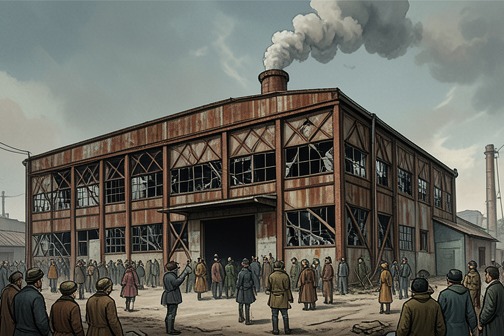
The [Cloverdale Industries](entity:location-recall-location-cloverdale-industrie-00e2be007fa9) shutdown marks the decisive institutional collapse of the operation that had allowed [Nathan Gold](entity:character-recall-character-nathan-gold-7365a72de97d) to hide a large-scale crystal-methamphetamine network behind a respectable [Statenville](entity:location-recall-location-statenville-9cba88c84180) business and civic identity. The seizure ends the company’s public life, interrupts its alleged drug manufacturing and distribution, and gives [Cal Murphy](entity:character-recall-character-cal-murphy-928376f1e444) and [Kelly Mendoza](entity:character-recall-character-kelly-mendoza-dcd2c2184a61) the central subject of the national story they have been pursuing at great personal risk.
## Causes and Hidden Structure
Cloverdale Industries was founded in 2001, two years before Nathan Gold became mayor of Statenville. Publicly, it was a fast-growing multi-level marketing company selling mainly vitamins and health products. According to FBI officials, however, the company provided the structure Gold needed to build an extensive crystal-methamphetamine distribution network across the Northwest after assuming the mayor’s office in 2003. The apparent health-products enterprise therefore functioned as a respectable surface for a criminal system whose reach extended as far north as Vancouver, Canada, and east as far as Denver.
The company’s protection depended on more than Gold’s assumed identity and political position. Guy Thompson had accepted a monthly brown paper bag containing exactly one hundred twenty-dollar bills in exchange for pretending that Statenville was merely a sleepy town and refraining from investigating its hidden secret. The resulting silence helped preserve the civic appearance on which Cloverdale Industries depended. When Cal Murphy and Kelly Mendoza began asking questions about the deaths of three local boys, their reporting encountered pressure from both the newspaper and local authority: Guy Thompson ordered Cal to seek only material from [Sheriff Jones](entity:character-recall-character-sheriff-jones-4b82540aea31), later insisted that he produce a shallow reaction piece, and warned him to stop pursuing matters that had drawn the publisher and the sheriff’s attention.
The concealment also operated through intimidation. After a violent encounter, Cal Murphy read a letter telling him to keep quiet, invent a cover story, and avoid telling Kelly Mendoza or Guy Thompson what had happened. The letter called him an important ally while warning that the people behind the events had other ways of persuading him. This mixture of recruitment, censorship, money, and threat allowed the Cloverdale system to remain publicly plausible even as evidence accumulated around it.
## The Drug-Marking Evidence
The investigation acquired a concrete physical clue when Cal Murphy opened a package labeled “Clean and Clear” and found that the bottle contained white crystals rather than cleaning liquid. Kelly Mendoza identified the substance as crystal meth. The discovery connected the apparently ordinary commercial environment surrounding Cloverdale Industries to the deaths and distribution network under investigation.
Further research revealed the history of the [CPZ marker program](entity:action-recall-action-fbi-cpz-cbbe6de57047). The [Federal Bureau of Investigation](entity:organization-recall-organization-federal-bureau-o-f1c5664278d2) had once considered using [CPZ](entity:object-recall-object-cpz-fb4f361990d1) to mark drugs, allowing unusual cases to alert the [Centers for Disease Control and Prevention](entity:organization-recall-organization-centers-for-dise-242754e055e8) and help federal investigators trace the spread of a dealer’s network. Field tests in 2008 in [Seattle](entity:location-recall-location-seattle-ec620f372076), Los Angeles, and Phoenix involved tainting individual doses; each drug user died, although the report did not specify the cause. The program was then disbanded, demonstrating that the marker’s usefulness as an investigative technology was inseparable from the lethal risks it created.
The abandoned research was later revived outside its ethical limits by [Buddy Walker](entity:character-recall-character-buddy-walker-6bfab5255c83) and [Elliott Mercer](entity:character-recall-character-elliott-mercer-8b2e2f857624), Federal Bureau of Investigation agents operating undercover in Statenville. Walker had a minor in chemistry and believed he could succeed where trained bureau chemists had concluded that the method was impossible to test safely on humans. Before the human consequences emerged, animal testing had already shown the danger: monkeys ripped at themselves and died, while dogs scratched and clawed themselves to death. Officials had judged the idea theoretically promising but ethically unacceptable for human experimentation.
Walker nevertheless pressured Mercer to participate. At first, the amount inserted into drug shipments was too small to track an entire distribution route or trigger the desired alert. Walker then found drugs in [Riley Gold](entity:character-recall-character-riley-gold-084ece358650)’s car and mixed the marker into that batch, believing that Riley and other drug-using teammates could be observed. He failed to account for the possibility that the compound would kill them, despite Mercer’s warnings. The shutdown thus exposed not only Cloverdale Industries’ alleged trafficking but also the destructive collision between a federal surveillance objective, an unauthorized experiment, and a local drug supply.
## Seizure and Public Announcement
After the Federal Bureau of Investigation confirmed that Deangelo was using the alias Gold, agents had spent years embedded in Statenville gathering prosecutable evidence and mapping how far the operation reached. Buddy Walker and Elliott Mercer maintained convincing false backgrounds and even staged minor encounters with the law to avoid Gold’s suspicion. Their assignment was broader than arresting Gold alone: the bureau wanted evidence against the people who sold and moved Cloverdale’s drugs on streets and across state lines.
The operation reached its crisis when Gold chose suicide rather than face charges. During the covert effort to obtain a confession, he shot Elliott Mercer twice, pushed him from a cliff into [Cold River Canyon](entity:location-recall-location-cold-river-canyon-45cd976bddfc), and then plunged into the canyon himself. Gold was also suspected of more than a dozen murders committed while he had been a captain for the [Scarelli family](entity:character-recall-character-scarelli-family-87c4def82b3f) in [Boston](entity:location-recall-location-boston-aded649f4602). His death removed the central figure from the courtroom process, but it did not prevent the federal seizure of the organization he had built.
Following a debriefing at the Federal Bureau of Investigation [Salt Lake City](entity:location-recall-location-salt-lake-city-858c034c1641) field office, Cal Murphy asked officials to delay announcing both Gold’s death and the Cloverdale Industries bust until the next morning. Cal argued that his completed story would make Elliott Mercer appear to be the sole villain while failing to distinguish him from Buddy Walker. The bureau agreed after negotiation, partly because Cal had risked his life. The delay gave Cal and Kelly Mendoza time to prepare a fuller account rather than allowing the first official announcement to define the entire meaning of the case.
The federal action itself was direct: officials seized control of Cloverdale Industries and shut down its operations while the bureau investigated the alleged drug-making plant. The closure transformed the company from a functioning local institution into evidence under federal control. Its commercial identity, political protection, and distribution capacity were suspended at once, leaving the investigation to determine the full scale of the alleged operation.
## Reporting and Consequences
Cal Murphy’s story appeared in two newspapers the following day under his byline, and the Salt Lake City connection was made explicit: drugs had been flowing into the city from Cloverdale Industries. The Seattle newspaper also used the connection. Kelly Mendoza’s photojournalism strengthened the report by capturing the people and places involved, giving the story a visual record to accompany Cal’s written reconstruction.
The publication enlarged the shutdown beyond a local business closure. It presented Cloverdale Industries as the infrastructure of a regional drug operation and placed Statenville within a network extending across state and national boundaries. The front-page treatment also countered the earlier effort to reduce the deaths to funeral arrangements, flowers, reaction pieces, or isolated local misfortune. Evidence that had been contained by intimidation and institutional silence was reorganized into a public narrative linking corporate respectability, political power, federal experimentation, and lethal drug distribution.
The consequences were personal as well as civic. Cal Murphy and Kelly Mendoza no longer knew whether they still had jobs at [The Register](entity:organization-recall-organization-the-register-f0a1d26cd658), and they could not seriously imagine continuing to work in a town whose economy and livelihood their investigation had damaged directly or indirectly. Yet their reporting produced an offer from Youngman at The Tribune, who praised their work and offered both of them jobs. The shutdown therefore destroyed Cloverdale Industries’ public structure while opening a new professional path for the journalists who helped make its hidden operation visible.
## Significance
The Cloverdale Industries shutdown is not simply the end of a criminal enterprise. It is the point at which competing systems for producing truth confront one another. Local power tried to manage visibility through payments, editorial pressure, official silence, and threats. The Federal Bureau of Investigation pursued a prosecutable case but also carried the legacy of a dangerous CPZ program whose experimental logic had already produced deaths. Cal Murphy and Kelly Mendoza used physical evidence, covert disclosures, photographs, and a negotiated publication window to turn those fragments into an account that could travel beyond Statenville.
The event also preserves a moral distinction within the apparent victory. Federal seizure stops Cloverdale Industries, but the operation’s exposure does not erase the damage caused by the marker experiment or by the people who treated drug users as instruments in a tracking system. Buddy Walker’s impatience, Elliott Mercer’s compromised participation, and Gold’s criminal network belong to the same chain of consequences, even though the final public account sought to assign blame more precisely. The shutdown closes the company’s doors, but it leaves the reader with a larger question about whether an institution can claim to serve public safety while producing danger through secrecy, unauthorized experimentation, and controlled information.
Event 17
Cal Murphy's Cloverdale exposé
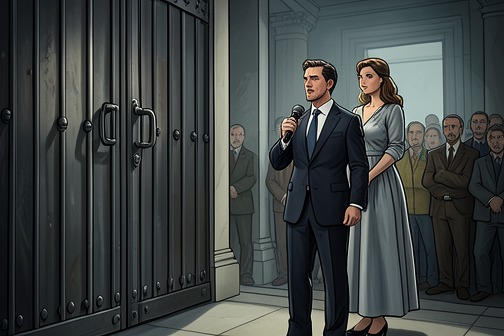
[Cal Murphy's Cloverdale exposé](entity:event-recall-event-1b900243ffe1) is the decisive journalistic culmination of the investigation into [Statenville](entity:location-recall-location-statenville-9cba88c84180)'s three dead high-school football stars. It exposes how the official overdose story concealed fatal drug markers, connects the deaths to [Cloverdale Industries](entity:location-recall-location-cloverdale-industrie-00e2be007fa9) and a cross-border distribution network, identifies [Nathan Gold](entity:character-recall-character-nathan-gold-7365a72de97d) as [Boston](entity:location-recall-location-boston-aded649f4602) mobster Carmen Deangelo, and records the violent collapse of the operation in [Cold River Canyon](entity:location-recall-location-cold-river-canyon-45cd976bddfc). The report also marks [Cal Murphy](entity:character-recall-character-cal-murphy-928376f1e444) and [Kelly Mendoza](entity:character-recall-character-kelly-mendoza-dcd2c2184a61)'s passage from pressured local reporters to nationally visible investigative journalists.
## From Suppressed Suspicion to a Public Story
The exposé grows out of an information battle that began when [Sheriff Jones](entity:character-recall-character-sheriff-jones-4b82540aea31) insisted that the victims, including [Devin Reid](entity:character-recall-character-devin-reid-c6af22fb75f9), had died from simple drug overdoses. Cal Murphy and Kelly Mendoza noticed that three deaths within twenty-four hours made that explanation suspicious, but Jones answered that suspicion alone could not produce a conviction. He acknowledged that meth had been found at all three scenes while withholding the toxicology results, turning a fragment of truth into a device for ending further questions.
The pressure extended beyond the sheriff's office. Guy Thompson ordered Cal Murphy to go to the sheriff's office, obtain whatever Jones would provide, and return with material for the paper; later, Guy Thompson reduced the assignment to a reaction piece, effectively stripping Cal's investigation of its intended significance. [Joseph Mendoza](entity:character-recall-character-joseph-mendoza-670ae533dd19) likewise warned that nobody in town supposedly wanted anything beyond funeral arrangements and flowers for the boys' families. The contrast between public mourning and institutional resistance becomes central to the final report: the community is presented with a quiet tragedy, while the evidence points toward a system determined to keep the tragedy quiet.
The intimidation becomes explicit when Cal Murphy receives a letter warning him to conceal the previous night's events and create a cover story. The writers call him an important ally, promise information that could place him in the national spotlight, and threaten other forms of persuasion if he refuses to remain silent. They specifically instruct him not to show the letter or reveal the truth to Kelly Mendoza or Guy Thompson. Instead of ending the investigation, the warning demonstrates that the story reaches powerful interests capable of controlling both information and personal safety.
## The Evidence Behind the Exposé
The physical evidence overturns the official account. While hiding from armed pursuers, Cal Murphy and Kelly Mendoza open a box disguised as a bottle of Clean and Clear; inside is not cleaning liquid but white crystals. The substance resembles crystal methamphetamine, linking the apparent household object to the drug investigation and showing how ordinary containers can conceal the operation's products.
The deeper explanation comes from the [CPZ marker program](entity:action-recall-action-fbi-cpz-cbbe6de57047). Cal learns that the [Federal Bureau of Investigation](entity:organization-recall-organization-federal-bureau-o-f1c5664278d2) had once explored using [CPZ](entity:object-recall-object-cpz-fb4f361990d1) as a marker in drugs, with the aim of identifying users and mapping substantial dealers' distribution networks. The unusual medical cases were supposed to alert the [Centers for Disease Control and Prevention](entity:organization-recall-organization-centers-for-dise-242754e055e8), allowing the Federal Bureau of Investigation to obtain basic information about how far a dealer's network extended.
The program had already failed in field tests conducted in 2008 by undercover operatives in [Seattle](entity:location-recall-location-seattle-ec620f372076), Los Angeles, and Phoenix. In each city, a user died after receiving a tainted individual dosage, although the report did not specify the cause. The program was disbanded because its lethal results created precisely the kind of publicity the Federal Bureau of Investigation did not want. The exposé therefore does more than identify a local crime: it reveals how an investigative technology designed for surveillance and network mapping became entangled with uncontrolled risk and institutional secrecy.
The final account states that the marker itself, rather than the methamphetamine, caused the Statenville deaths. The chemical was intended to produce the sudden appearance of a rare disease, which would trigger a public-health alert and help federal investigators track the drug network. It was not supposed to be fatal. A rogue Federal Bureau of Investigation agent altered the additive so that it forced liver bile into the bloodstream, producing uncontrollable itching beneath the skin. Already intoxicated with methamphetamine, all three victims scratched themselves to death. [Riley Gold](entity:character-recall-character-riley-gold-084ece358650), one of the dead student-athletes, was also Deangelo's son, binding the federal experiment, the local deaths, and the crime boss's personal history together.
## The Network Named in Print
Cal's article identifies Carmen Deangelo as the architect behind a drug operation extending north to Vancouver, Canada, and east to Denver. Deangelo had lived in Statenville under the assumed name Nathan Gold, gradually establishing himself as a respectable community member before running for mayor eight years earlier. The civic identity was not a replacement for his criminal life; it was the platform from which he built a new criminal operation.
The report traces Deangelo's history to Boston, where he had served as a captain for the [Scarelli family](entity:character-recall-character-scarelli-family-87c4def82b3f) and was suspected in more than a dozen murders. A gold coin from the nineteenth century, found in the mouth of a dead drug dealer in [Portland](entity:location-recall-location-portland-1d591afddc1c) in 2005, provided the signature that alerted the Federal Bureau of Investigation to Deangelo's possible return to organized crime. The coin connects the apparently respectable Nathan Gold to the older Carmen Deangelo identity and gives the investigation a material sign of continuity across cities and years.
The federal response was a deep-cover operation. Two agents were deployed to Statenville to build a case against Deangelo and Cloverdale Industries, but the plan went awry when the three local football stars died. Local law-enforcement officials allowed residents to believe that the boys had overdosed on methamphetamine and pressured the coroner's office to release falsified reports. The exposé thus names not only a criminal enterprise but also the local mechanisms that made the enterprise appear compatible with Statenville's peaceful self-image.
## Publication, Timing, and Consequences
After a debriefing at the Federal Bureau of Investigation's [Salt Lake City](entity:location-recall-location-salt-lake-city-858c034c1641) field office, Cal Murphy asks officials to delay announcing Carmen Deangelo's death and the seizure of Cloverdale Industries until the following morning. He argues that the article will demonize Mercer alone rather than [Buddy Walker](entity:character-recall-character-buddy-walker-6bfab5255c83). The Federal Bureau of Investigation agrees after negotiating the details, partly because Cal risked his life to obtain the story. This delay gives the report a controlled publication window while preserving Cal's account of responsibility and preventing the immediate announcement from flattening the complicated chain of betrayal and coercion.
Cal Murphy and Kelly Mendoza then take their findings to The Tribune. [Dave Youngman](entity:character-recall-character-dave-youngman-5945684385a4) gives Cal two hours to write an exclusive that is well sourced, while Kelly meets with the photo chief. The article appears in two newspapers the next day under the byline Calvin J. Murphy, beginning with confirmation that Carmen Deangelo, the long-standing Boston mobster living as Nathan Gold, died after murdering an FBI agent and plunging into Cold River Canyon.
The published report reconstructs the final confrontation. During a covert operation intended to elicit a confession, Deangelo refuses to face charges. He shoots FBI agent [Elliott Mercer](entity:character-recall-character-elliott-mercer-8b2e2f857624) twice, pushes him from a cliff into the canyon, and then plunges to his own death. The article records Deangelo's death not as an isolated escape but as the terminal violence of an operation whose political respectability, drug manufacturing, federal infiltration, and local concealment have all failed at once.
The report also produces institutional consequences. The Federal Bureau of Investigation seizes control of Cloverdale Industries and shuts down its operations while the investigation continues. Dave Youngman edits the article to explain the connection to Salt Lake City, where drugs from Cloverdale Industries had been flowing, and [The Seattle Times](entity:organization-recall-organization-the-seattle-time-6d432483d0e4) makes a similar connection. Kelly Mendoza's photographs strengthen the package by capturing the people and places involved, allowing the written investigation and visual evidence to reinforce each other rather than leaving the story dependent on official statements.
## Journalistic Significance and Ending
The exposé changes the meaning of the deaths by replacing an apparently closed explanation with a chain of causation: a federal marker initiative, an altered chemical additive, three deaths, falsified local reports, a drug-manufacturing facility, and a criminal network managed by a hidden mob figure. Its power comes from making previously separated facts legible as one system. What had been treated as coincidence becomes evidence of a wider operation, and what had been protected as Statenville's reputation becomes part of the story itself.
Its publication also reverses the hierarchy that had governed the investigation. Sheriff Jones had controlled access to official information, Joseph Mendoza had invoked the town's appetite for silence, Guy Thompson had attempted to reduce the investigation to a disposable reaction piece, and the warning letter had tried to isolate Cal Murphy from Kelly Mendoza and the newspaper. The final article answers each form of control through corroboration, named identities, geographic connections, photographs, and a public account that can no longer be confined to Statenville.
Dave Youngman calls the work outstanding and offers both former Register employees jobs. The offer arrives after three days of danger, flight, investigation, and compressed deadline work, when Cal Murphy and Kelly Mendoza are exhausted by the adrenaline that carried them through. Their decision is left open, but the immediate consequence is clear: the story has moved beyond the local paper that tried to contain it and has given its reporters a larger professional future. Cal Murphy's Cloverdale exposé ends as both disclosure and escape—the crime network collapses into public knowledge, while the journalists who pursued it step outside the information system that once tried to silence them.